Exact Model
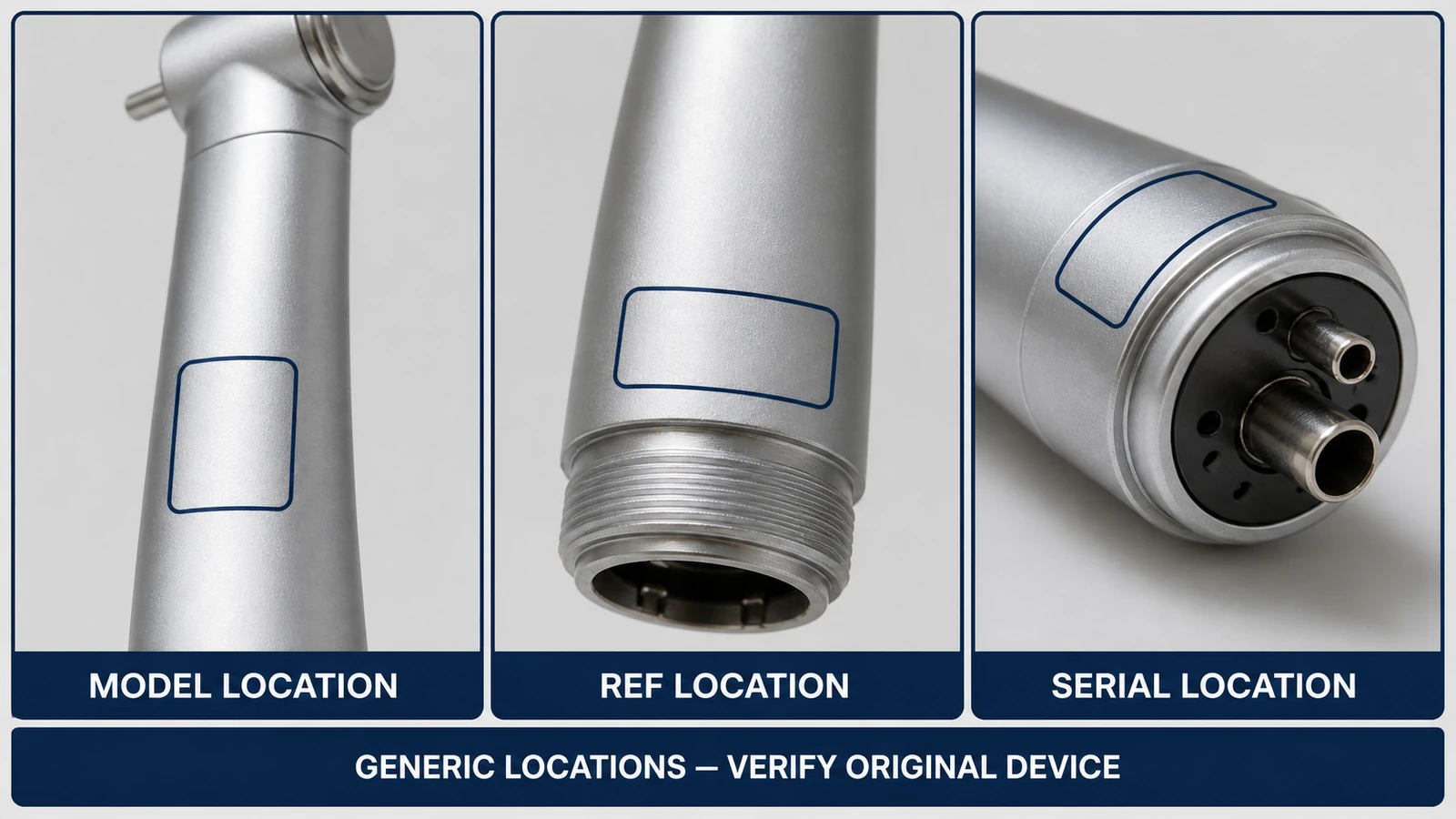
Use the complete handpiece model as documented or marked whenever possible.

Multi-Brand Model Identification
Provide the dental handpiece brand and exact model so the application can be reviewed. Version, assembly and bearing-position details may also be required before a bearing or kit can be confirmed.
Model-Based Identification
Provide the brand, complete model name and any available version, manufacturer reference, turbine, cartridge or assembly details for application review.
Include photos, existing bearing numbers and dimensions when the exact model or assembly is uncertain.
Model Search Inputs
Start with the original brand and complete model name shown on the handpiece or service documentation. Family, reference, version and configuration details can help distinguish similar models.
Use the complete handpiece model as documented or marked whenever possible.
A product family can narrow the options, but the exact model should still be confirmed.
Include the manufacturer REF or other brand-specific reference when it is available.
Include the serial range, regional version, connection or assembly information when it appears on the product or documentation.
Critical Model Rule
Compares documented formatting or naming variations that may refer to the same handpiece model.
Purpose: identify the intended model consistently.
Requires separate application evidence. Similar names, shared families or adjacent model numbers do not prove that the same bearing fits.
Purpose: confirm the bearing or kit for the specific application.
Model Match Status
Model-identification confidence and product compatibility are separate. These terms describe whether the supplied information may identify an exact model, a documented name variation, a family or an unresolved application.
Bearing Application Review
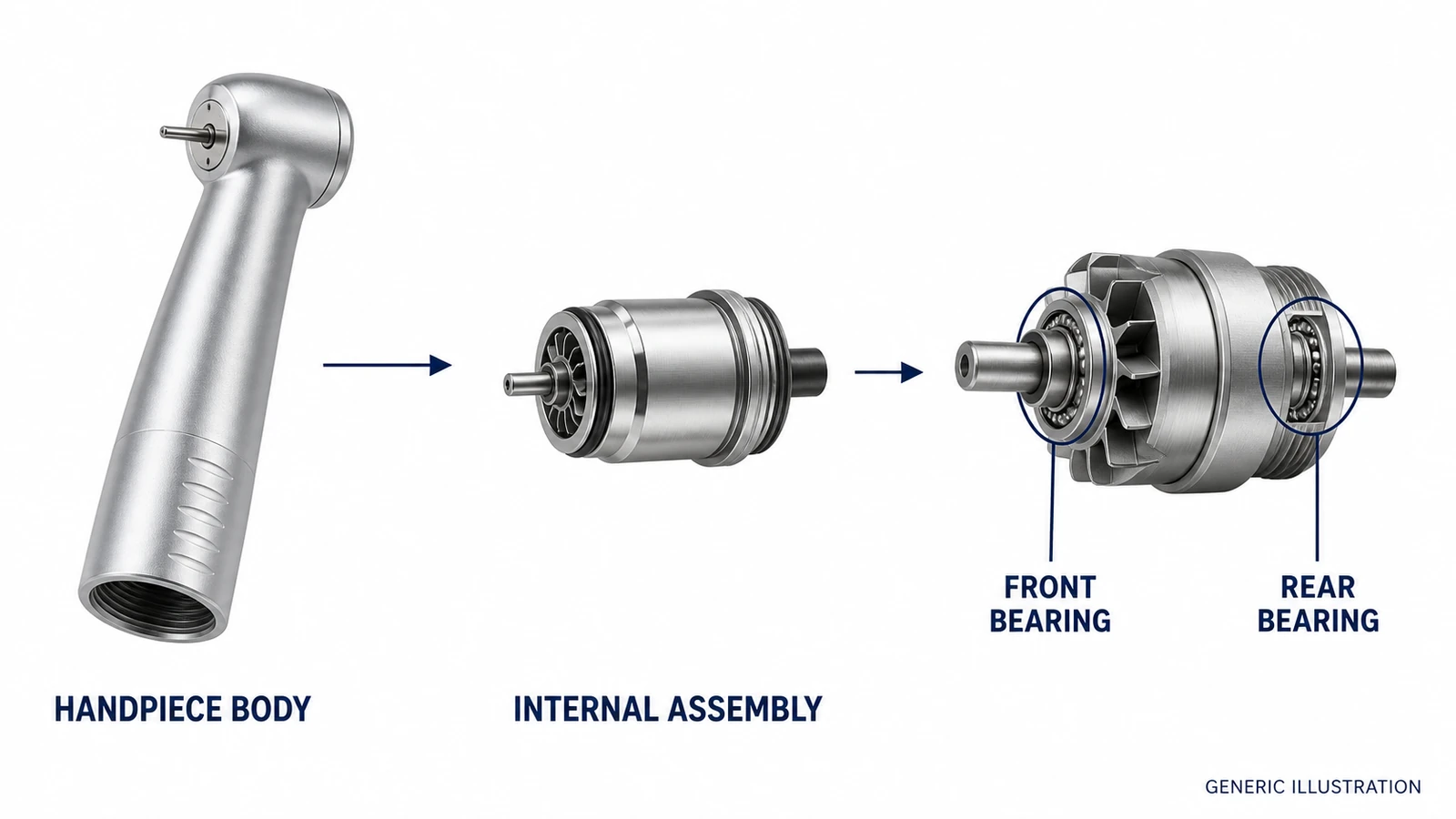
One handpiece model can have more than one bearing record. Confirm the exact assembly, version and bearing position before selecting an individual bearing or model-specific kit.
Bearing Position
A single model or assembly can contain more than one bearing position. Confirm the position on the actual assembly before selecting a replacement.
Model-Specific Product Type
A model-specific kit may combine the bearings required for a defined handpiece or assembly. Confirm the exact kit SKU, components and application before ordering.
Application Clarity
Not always. An exact model can substantially narrow the application, but version, turbine or cartridge assembly, bearing position and other configuration data may still need confirmation.
It identifies the handpiece model represented by the supplied name or documented reference.
The assembly, version, serial range, connection, bearing position and exact product application may still need review.
Version Awareness
In some applications, serial ranges, regional versions, connections or assembly variants distinguish different configurations. Include these identifiers when they are available.
Include serial information when it is available and relevant to the application.
Include the regional or market designation when it distinguishes the model or assembly.
Provide the connection or backend information separately from the model name.
Provide the exact turbine, cartridge, head or assembly reference when available.
No Exact Model Match?
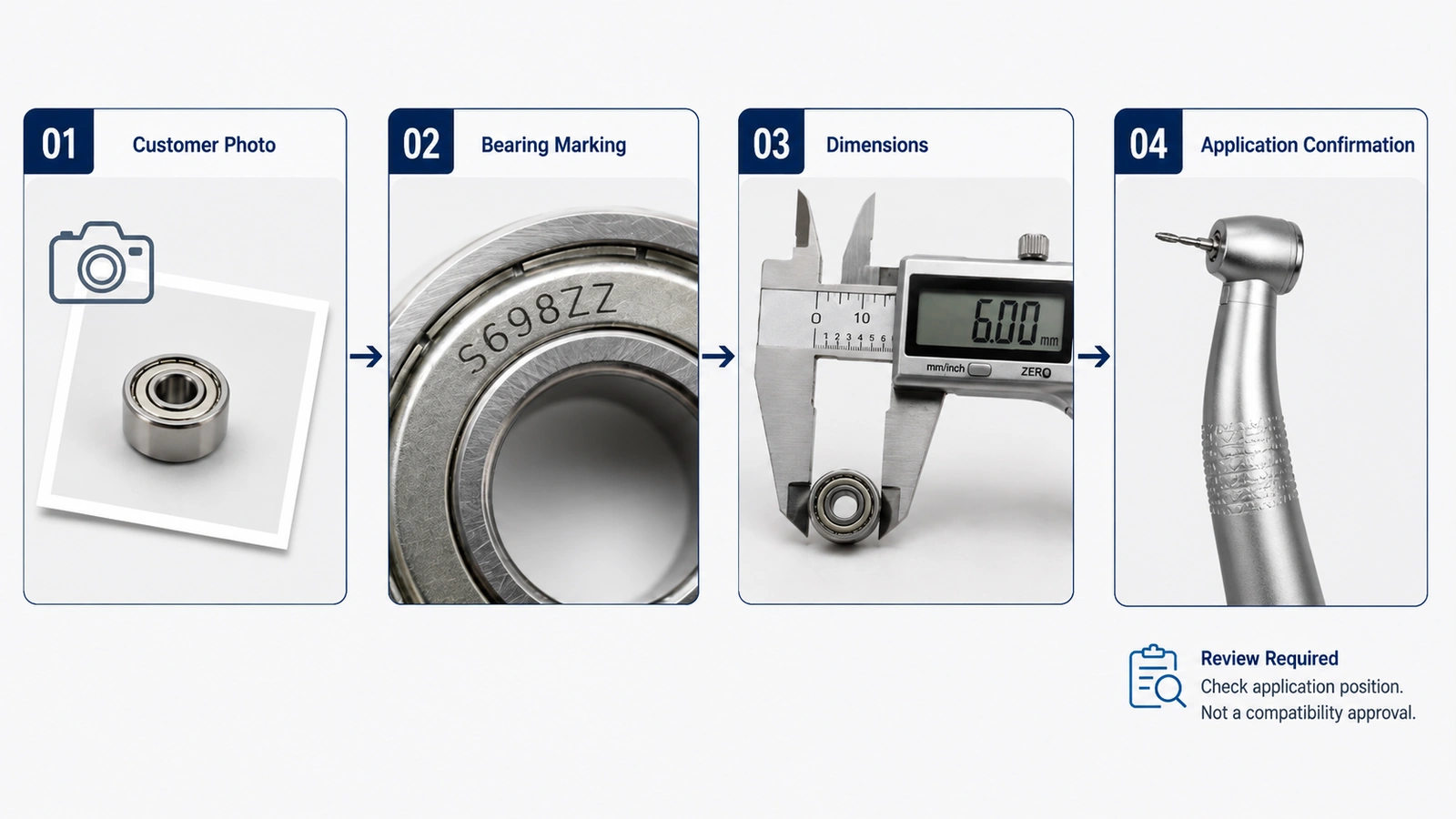
If the model cannot be confirmed, use the strongest identifier still available. A bearing number, dimensions, alternative reference or clear photos can support the next review step.
Use the bearing-number identification path when the removed bearing number is available.
Use ID, OD and width to narrow possible bearing candidates.
Use supplier, historical or alternative reference mapping.
Combine partial model data, bearing markings, dimensions and photos.
Browse Handpiece Brands
If you know the manufacturer but not the complete model, use the relevant brand page to browse model families and available application information.
Browse available KaVo model and application information.
Browse available NSK product-family and model information.
Browse W&H model, REF and application information.
Browse Sirona model, version and application information.
Browse Bien-Air model, reference and application information.
Application Review
Keep model identity, naming variations, assembly context and bearing compatibility separate. This helps distinguish documented information from details that still require confirmation.
Retain the original model name and compare it with the documented model identity.
Alternative names and manufacturer references are checked before they are treated as the same model.
Confirm the exact assembly and bearing position where those details affect the application record.
Confirm bearing and kit compatibility separately from the model-name match.
Bulk B2B Review
Repair shops and distributors can send a structured model list with brand, exact model, version or reference, existing bearing number and quantity information.
B2B Application Review
Provide brand, model, version, assembly, current bearing reference and quantity data for structured technical and commercial review.
Quick Answers
Start with the exact handpiece brand and model. Add a manufacturer reference, version, serial information or assembly reference when available, then submit the details for application review before selecting a bearing or kit.
Not always. An exact model can substantially narrow the application, but version, assembly, bearing position and other configuration details may still require confirmation.
Yes. A handpiece, turbine, head, motor or other assembly can contain more than one bearing position, and those positions may require different bearings.
Yes. A product family can contain multiple exact models, assemblies or versions, so the complete model should be confirmed before selecting a bearing.
Start with the brand and the readable portion of the model. Use the product family or nearby model references to narrow the options, then confirm the complete model before selecting a bearing.
In some applications, serial ranges, regional versions, connections or assembly variants distinguish different configurations. Include these details when they are available.
Use a bearing number if available, search by dimensions, review an alternative reference or submit the handpiece and bearing information through the identification workflow.
Yes. Prepare a structured list with the brand, exact model, version or reference, existing bearing number and quantity for each record, then include it with the RFQ details.
Identify the brand and exact model, preserve version or assembly information where relevant, then review the bearing position, product and compatibility status before ordering.