
Multi-Evidence Identification Workflow
Identify an Unknown Dental Handpiece Bearing
Use partial markings, dimensions, handpiece information, bearing position, physical features and photos to narrow unknown dental bearing candidates. Review the identification status and application evidence before confirming a replacement.
Identification warning: one matching feature, dimension or photograph does not automatically confirm the complete bearing specification or handpiece compatibility.
Identification Uses Multiple Evidence Types
Candidate
Identification
Identification
Markings
Dimensions
Handpiece
Position
Geometry
Photos
Start with What You Know
Submit the Available Details for Review
Provide the bearing number, dimensions, handpiece brand and exact model, assembly information, clear photos and required quantity when available.
Identification Status
Separate What Was Identified from Whether It Fits the Application
Identification status describes what the available evidence can establish about the bearing record. Compatibility status describes whether that bearing has been reviewed for the exact application.
Critical Distinction
Identification Status Is Not Application Compatibility
Identification Status
Describes what the evidence can establish about the bearing itself: identifier, dimensions, family or candidate record.
≠
Compatibility Status
Describes whether that bearing has been reviewed for the exact handpiece, assembly, version and bearing position.
Do not convert “identified” into “compatible” automatically.
A bearing can be identified accurately and still require separate application confirmation.
A bearing can be identified accurately and still require separate application confirmation.
GEO / Technical Answer
What Information Is Used to Identify a Dental Bearing?
Dental bearing identification can combine bearing markings, ID, OD and width, flange or special geometry, handpiece brand and model, assembly, bearing position and other reviewed construction or application evidence.
Markings & References
Complete markings are strongest; partial markings are candidate evidence only.
ID, OD, Width & Geometry
Dimensions narrow possible records but do not describe the entire bearing specification.
Model, Assembly & Position
Application context can distinguish candidates that share similar dimensions or markings.
Photo Guidance
What Makes a Useful Bearing Identification Photo?
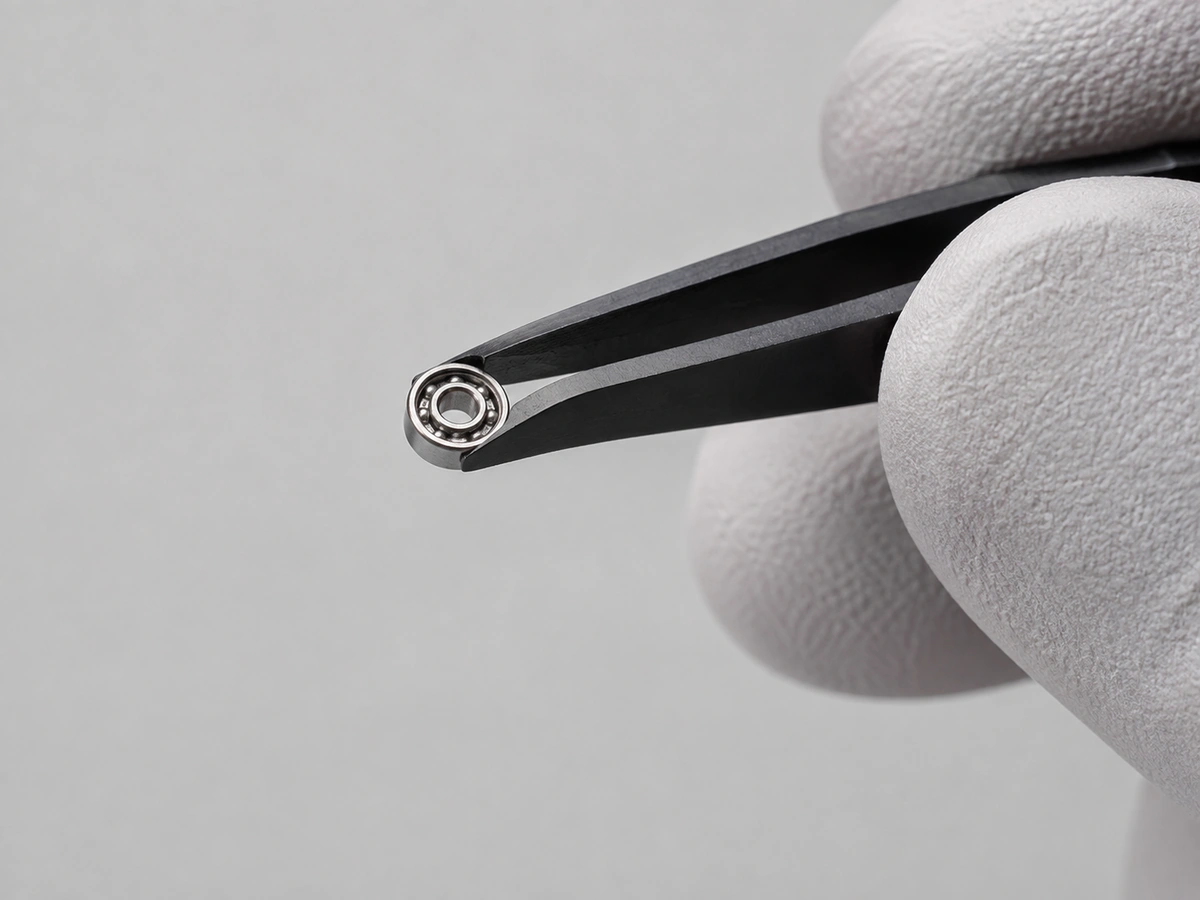
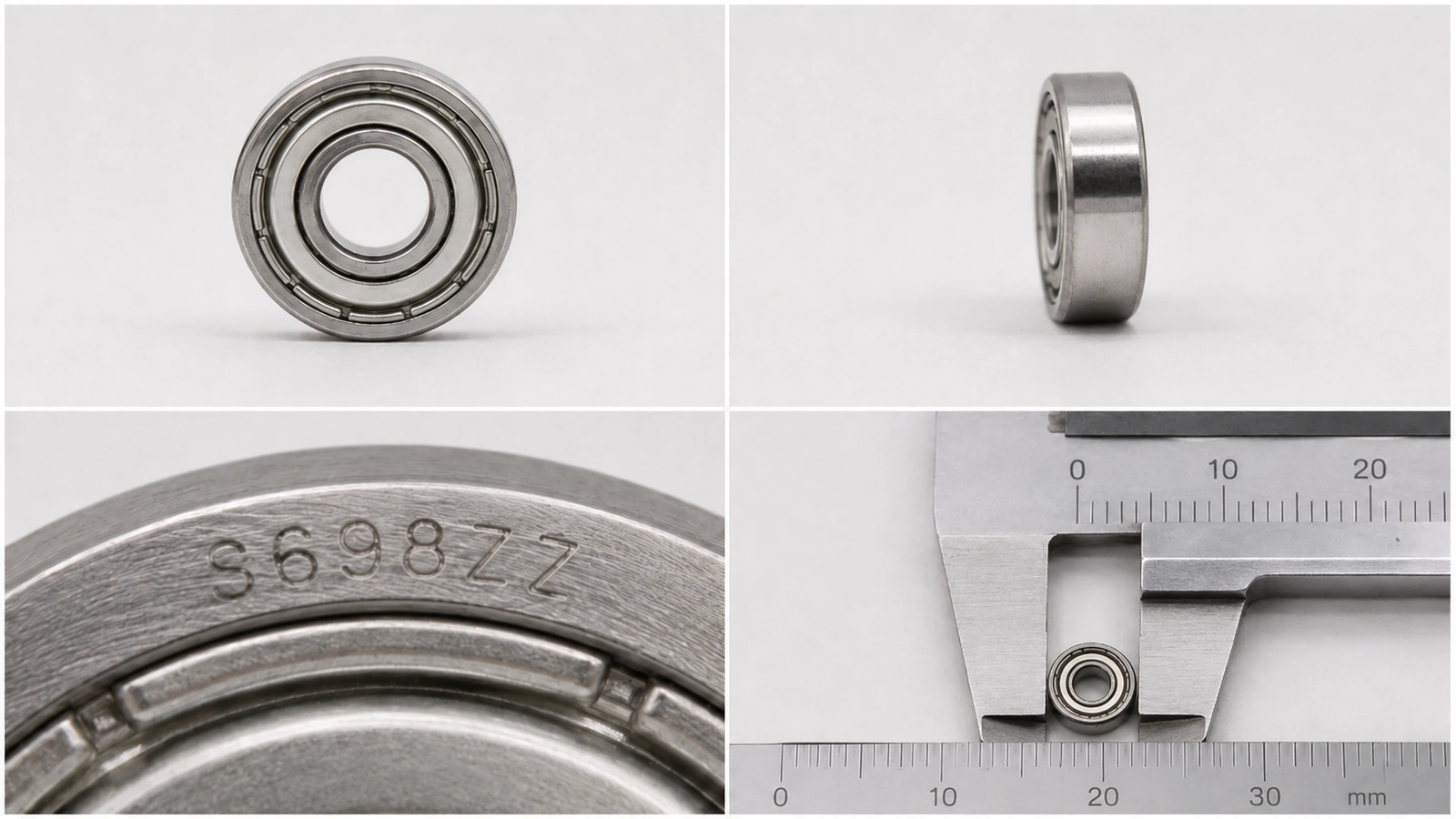
Clear, repeatable technical photography can provide useful identification evidence. Include multiple views whenever the bearing structure or marking cannot be shown clearly in one image.
Marking in Focus
Make letters, numbers and engraving readable without glare.
Full Bearing Visible
Avoid crops that hide flange, shield or other geometry.
Side Profile
Useful for flange, stepped rings and special external geometry.
Measurement Context
Where practical, photograph the bearing with a clear measurement reading.
Handpiece Model
Photograph the model marking separately from the bearing.
Assembly / Position
Document where the bearing was removed when that information is relevant and safe to provide.
Customer-submitted technical photos and procurement data are not published or indexed automatically. Public technical examples should be sanitized and explicitly approved.
E-E-A-T & Evidence Review
How We Review Bearing Identification Evidence
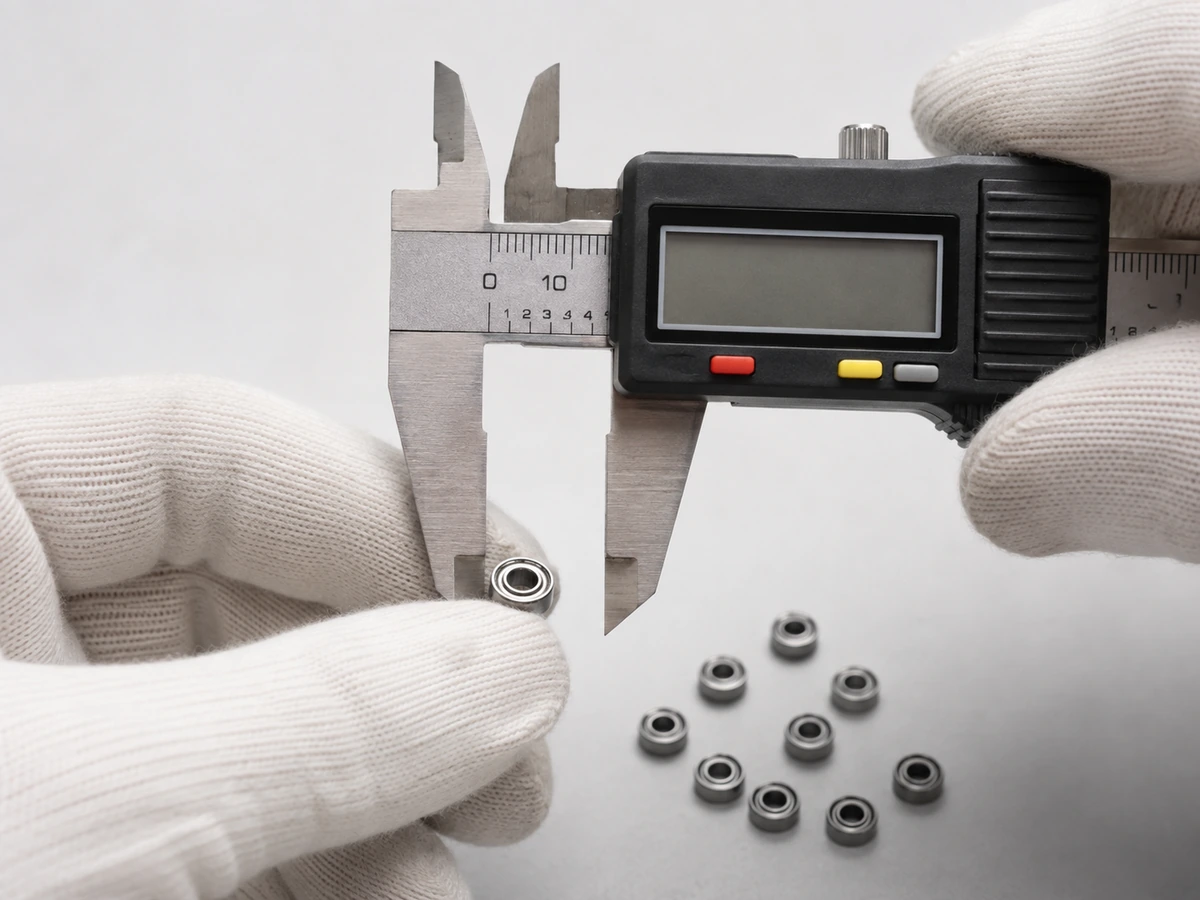
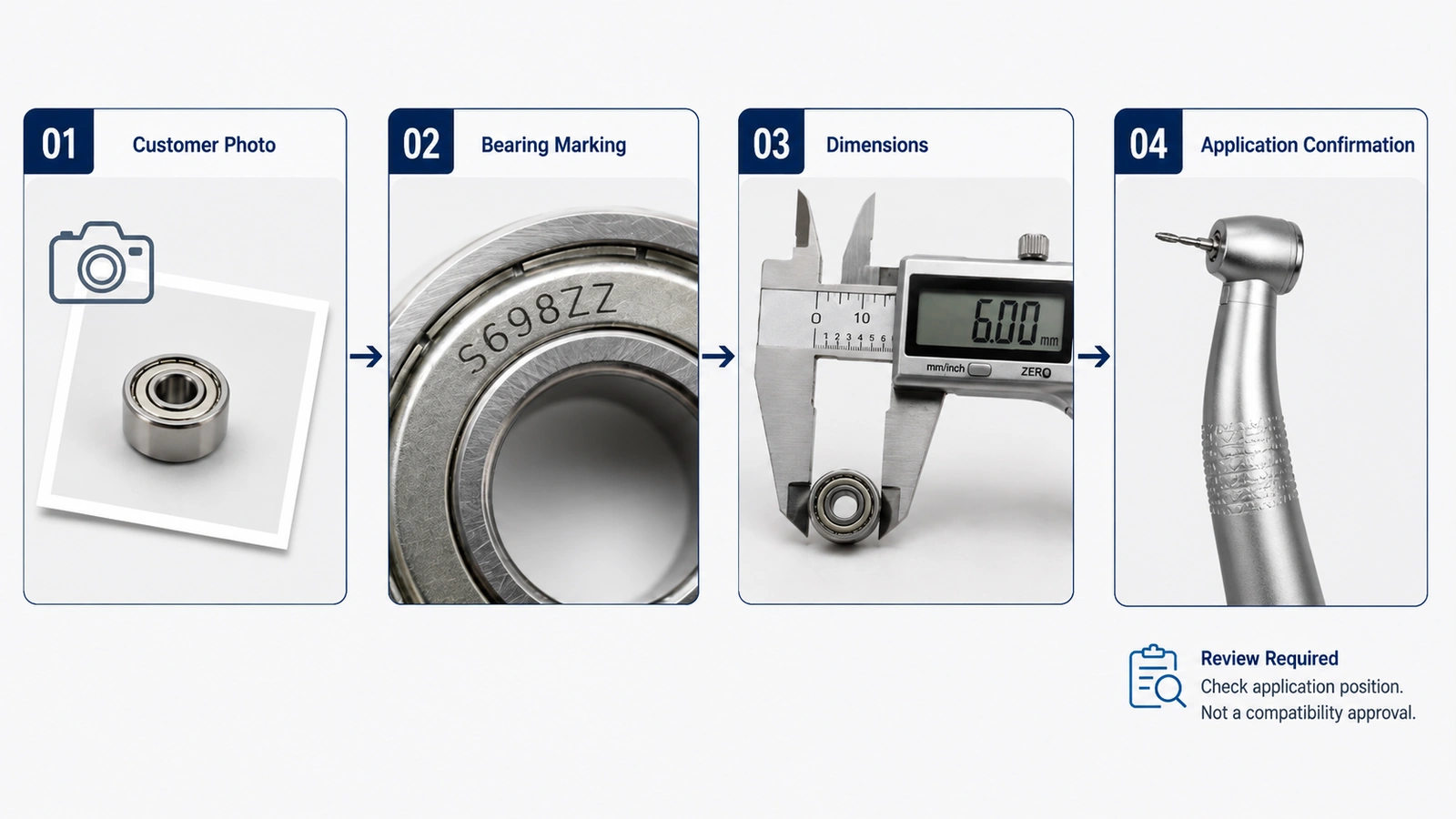
Each evidence type is considered separately so it remains clear why a candidate was returned and what still needs confirmation.
Original marking, primary number, partial marking or reviewed reference relationship.
ID, OD, width, flange dimensions and other measured geometry.
Brand, exact or partial model, assembly, version and bearing position.
Observed geometry, shield configuration, suspected material and supporting photographs.
Structured evidence supports a clearer review.
Recording each input separately instead of reducing everything to one free-text note or opaque score keeps candidate reasoning reviewable.
Recording each input separately instead of reducing everything to one free-text note or opaque score keeps candidate reasoning reviewable.
Technical Identification Request
Need Help with an Unresolved Bearing?
Submit a sample ID, visible markings, dimensions, handpiece information, assembly or position notes, clear photos and required quantity for technical and commercial review.
Visible bearing markings
ID / OD / width
Brand / model information
Assembly / bearing position
Clear technical photos
Quantity / forecast demand
ID / OD / width
Brand / model information
Assembly / bearing position
Clear technical photos
Quantity / forecast demand
Quick Answers
Dental Bearing Identification FAQ
How do I identify an unknown dental bearing?
Start with any visible bearing marking, then add ID, OD and width, handpiece brand and model, assembly, bearing position, visible geometry and clear photos. Use the combined evidence to narrow candidate bearing records before confirming compatibility.
What information is needed to identify a dental bearing?
Useful evidence can include bearing markings, dimensions, flange or special geometry, handpiece model, assembly, bearing position, visible construction features and supporting photos.
Can dimensions alone identify a dental bearing?
Not always. ID, OD and width can narrow the candidates, but bearings with the same external dimensions may still differ in construction or application.
Can I identify a dental bearing from a photo?
A photo can narrow possible candidates, but it may not reveal the complete internal construction or application requirements. Combine photos with markings, dimensions and handpiece information whenever possible.
What if the bearing number is only partially readable?
A partial marking can narrow a bearing family or candidate set, but it should not be treated as an exact-number identification. Add dimensions, model information and photos to improve the evidence.
What if there is no visible bearing marking?
Use dimensions, geometry, handpiece model, assembly, bearing position and photos to narrow candidates. If multiple records remain possible, request technical review rather than forcing an exact identification.
Does identifying the bearing confirm handpiece compatibility?
No. Identifying a bearing record establishes what the bearing may be; application compatibility establishes whether that bearing has been reviewed for the exact handpiece, assembly and bearing position.
Can I submit multiple unknown bearings for identification?
Yes. Assign each sample a unique ID and submit its markings, dimensions, handpiece information, photos and required quantity so the records remain traceable through technical review and RFQ.
Technical disclaimer:
This identification workflow provides general technical information for dental bearing identification and product selection. Candidate results do not automatically confirm exact identification, complete interchangeability or compatibility with a particular handpiece, turbine, cartridge or assembly. Application-specific documentation, dimensional inspection and compatibility evidence should be reviewed where relevant.
This identification workflow provides general technical information for dental bearing identification and product selection. Candidate results do not automatically confirm exact identification, complete interchangeability or compatibility with a particular handpiece, turbine, cartridge or assembly. Application-specific documentation, dimensional inspection and compatibility evidence should be reviewed where relevant.
Combine the Evidence — Then Confirm the Application
Use markings, dimensions, handpiece context, bearing position, physical features and photos to narrow candidates, then review identification and compatibility as separate decisions.