I Have the Complete SR144 Number
Use the full number, including suffixes and additional design codes.

Dental Bearing Family Reference
SR144 is a miniature inch-series bearing designation used as a base reference for multiple bearing configurations. Compare dimensions, suffixes, contact design, rolling-element material, cage, shield, special geometry and supporting dental handpiece application evidence to identify the correct SR144 variant.
Start with What You Know
Use the full number, including suffixes and additional design codes.
Compare width, contact design, material, cage, shield and geometry.
Use the brand, exact model, turbine or cartridge version and bearing position.
Submit dimensions, geometry, photos and application information for review.
Bearing Family Definition
SR144 is a miniature inch-series bearing designation used as a base reference. In dental applications, the complete bearing number and physical construction may identify a more specific SR144-based variant.
Base vs Application Variant
| Feature | Base SR144 Reference | Dental SR144 Variant |
|---|---|---|
| Bore / ID | Nominal SR144 family dimension | Confirm the exact product specification |
| Outer Diameter | Nominal SR144 family dimension | Verify flange or special outer geometry |
| Width | Base open reference width | May differ by variant |
| Shield | Base configuration | Open, shielded, integral or another specified design |
| Cage | Product-specific | May differ by dental variant |
| Rolling Element | Product-specific | Steel- or ceramic-ball variants may exist |
| Contact Design | Base-specific | Radial / angular-contact variants may exist |
| Geometry | Standard base geometry | May be smooth, flanged, stepped, grooved or extended |
| Application | General bearing reference | Requires supporting handpiece / assembly evidence |
Dimensions
Use the base SR144 dimensions as a family reference. Do not assume every dental SR144 variant uses the same width or external geometry.
| Dimension | Inch | Metric | How to Use It |
|---|---|---|---|
| Bore / ID | 0.1250″ | Approximately 3.175 mm | Base-family identification field |
| Outer Diameter | 0.2500″ | 6.35 mm | Base-family identification field |
| Base Open Width | 0.0937″ | Approximately 2.38 mm | Do not apply universally to dental variants |
Numbering Systems
A suffix or added design code can help distinguish one SR144 configuration from another, but suffix meanings should not be treated as globally universal.
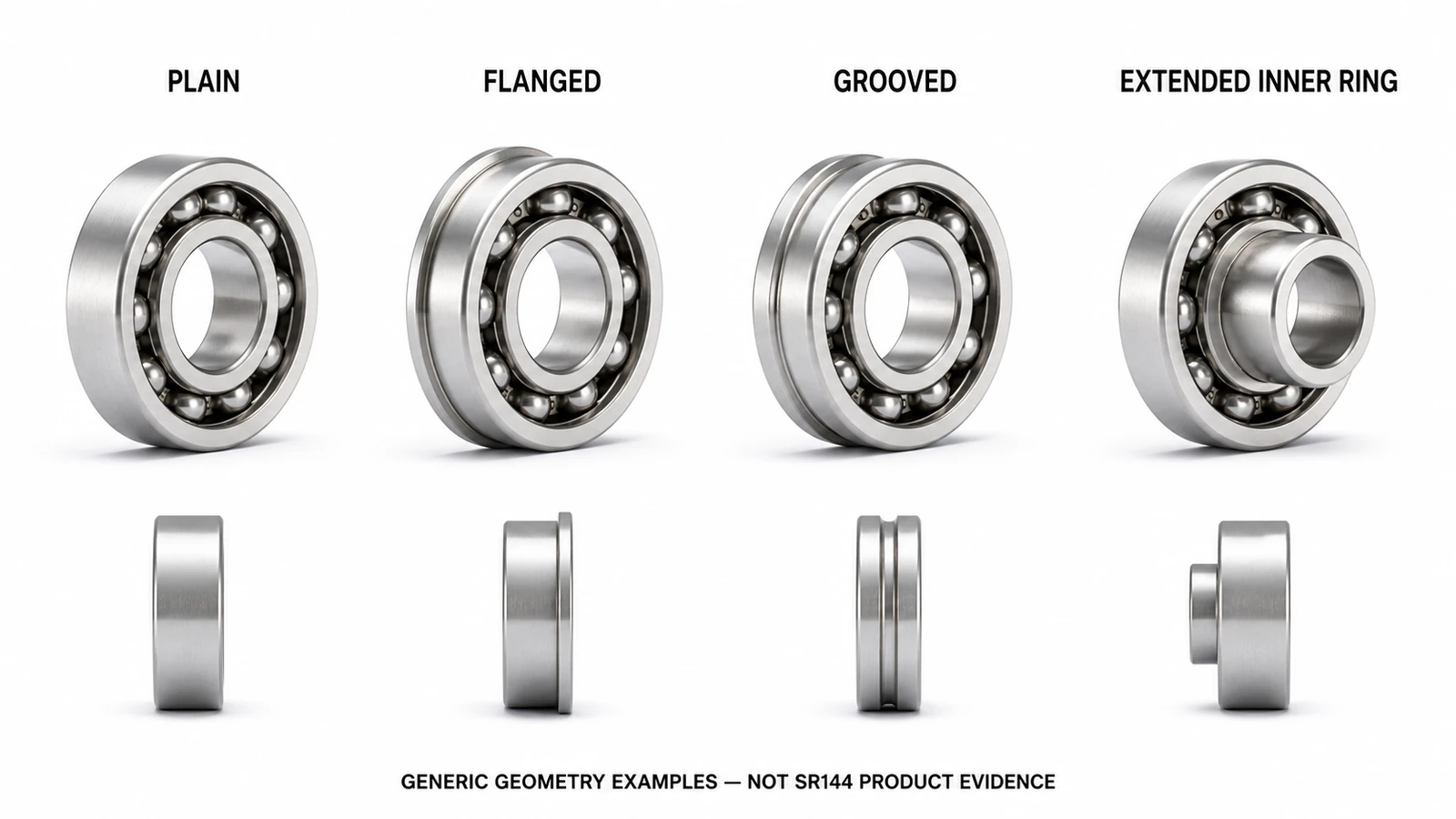
Physical Geometry
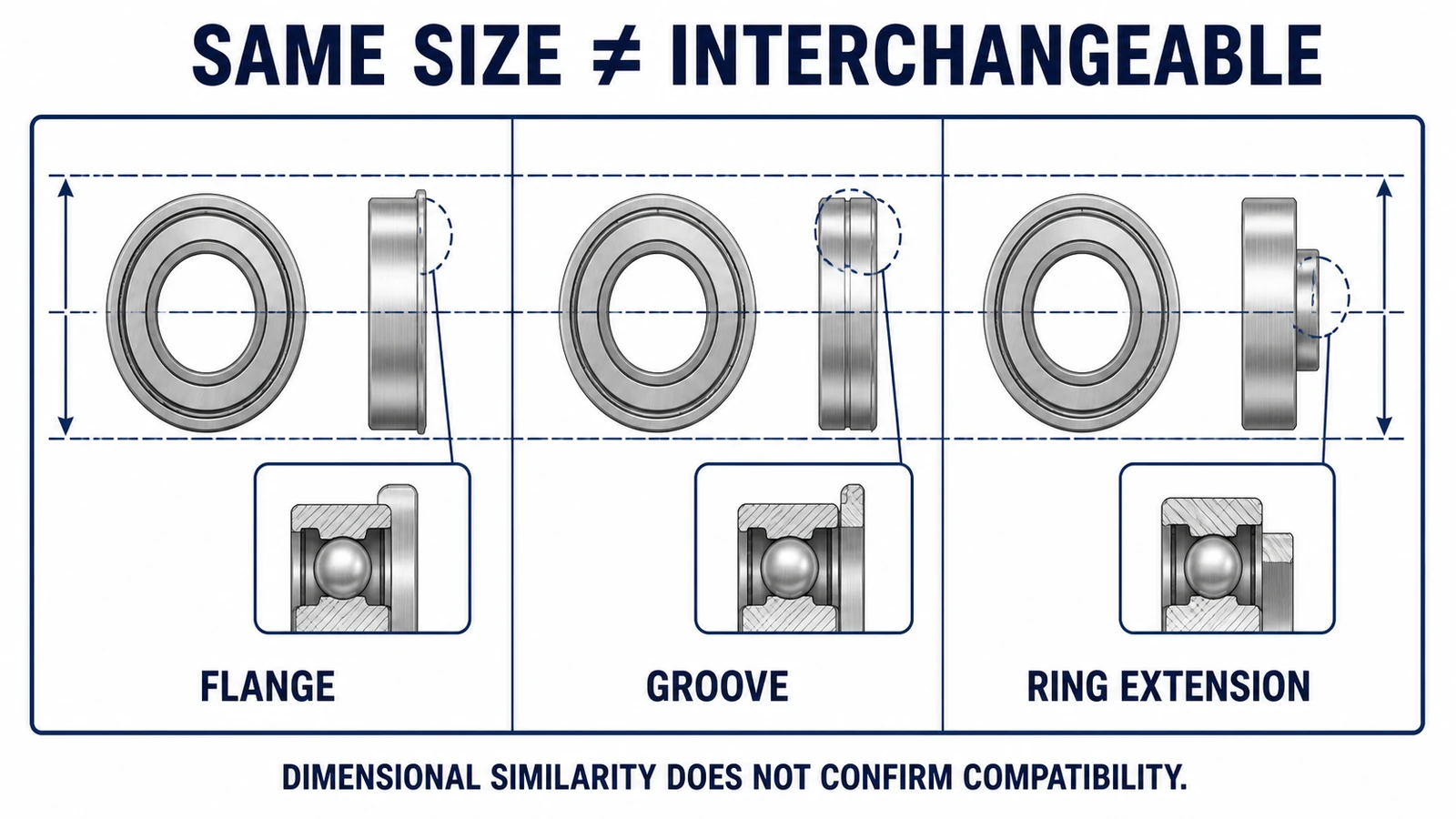
Geometry can distinguish two SR144-based products even when the base bore and outer diameter are similar.
Generic geometry illustration: not evidence of a specific SR144 product configuration.
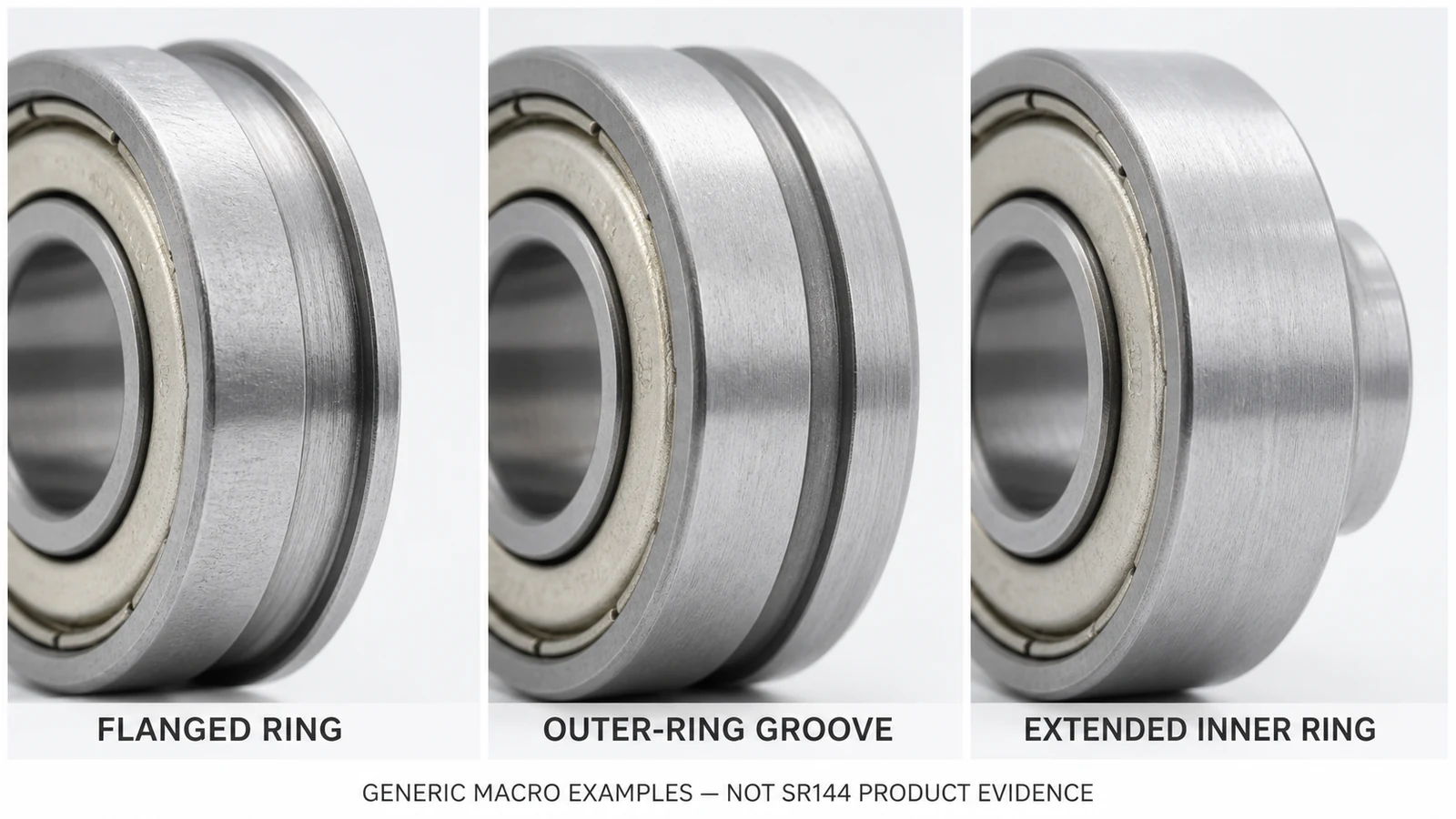
Standard external profile without an application-specific flange or visible stepped feature.
Record flange OD and flange width separately from the main bearing dimensions.
Special ring features may be important to fit, assembly or handpiece application.
Record inner-ring width separately when it differs from the outer-ring width.
Contact Design
Confirm the exact product design and intended application. A shared base number or external size does not prove that two internal designs are equivalent.
Angular-contact construction should be treated as an application-specific design characteristic and confirmed against the complete bearing number and assembly.
Rolling-Element Material
SR144-based dental configurations may use different rolling-element materials. Material helps describe the variant but does not identify the complete application.
| Attribute | Steel-Ball SR144 Variant | Ceramic-Ball SR144 Variant |
|---|---|---|
| Rolling Element | Steel as specified by SKU | Ceramic as specified by SKU |
| Ring Material | Product-specific | Product-specific |
| Cage | Product-specific | Product-specific |
| Shield | Product-specific | Product-specific |
| Contact Design | Must be confirmed | Must be confirmed |
| Application | Must be confirmed | Must be confirmed |
Interchangeability
No. The SR144 base reference can identify a bearing family, but dental variants may differ in construction and intended application.
Cross Reference
Use the cross-reference page to compare documented alternative references. A shared family name does not establish equivalence.
Keep the exact product or supplier SKU separate from the bearing designation.
Record the original source and exact reference string before normalization.
Treat documented alternatives separately from the primary product number.
Confirm whether a reference is exact, alternative, partial or still requires application evidence.
Structured Data
Confirm variant-level data before comparing or ordering an SR144-based bearing.
Related Product Categories
Use application pages when the handpiece type is known, or material pages when rolling-element material is part of the requirement.
Use this category when the primary requirement is a high-speed turbine or cartridge application.
Use this category for low-speed, contra-angle, motor, spindle and related applications where relevant.
Browse the material category when ceramic rolling elements are part of the requirement.
Browse the material category when steel rolling elements are part of the requirement.
Data Quality
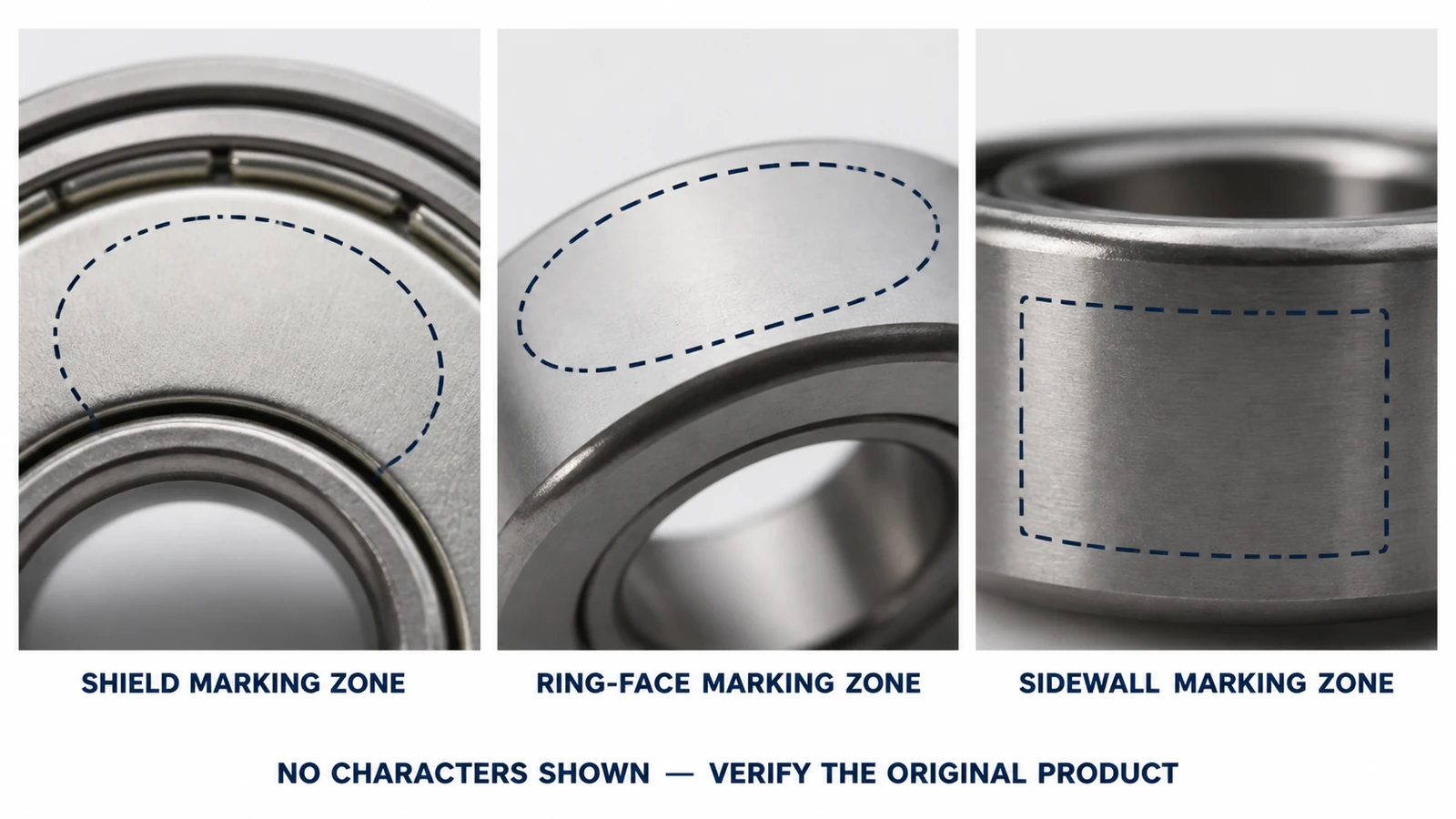
Use measured dimensions, preserved markings and supporting application evidence instead of relying on broad quality claims.
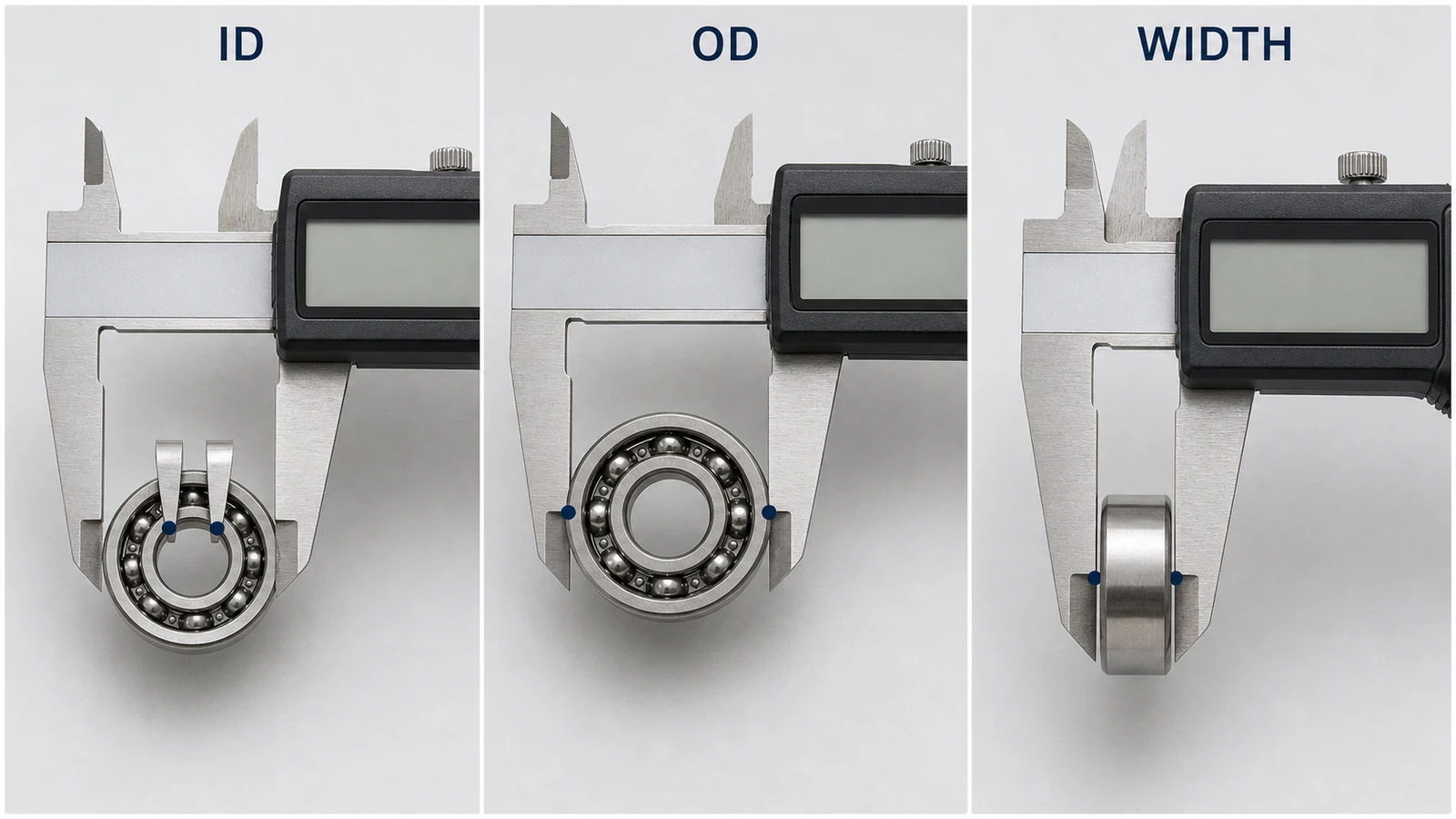
Confirm ID, OD, outer width, inner-ring width and special geometry from product measurements or documented specifications.
Preserve the original full number and source; keep any normalized comparison value separate.
Confirm each variant against the exact handpiece, turbine, cartridge and bearing position only when supporting evidence exists.
B2B SR144 Supply
Submit SR144 numbers, current supplier references, dimensions, handpiece models and required quantities for structured comparison and commercial review.
Common Questions
SR144 is a miniature inch-series bearing designation used as a base reference. Dental SR144-based products can use additional suffixes, dimensions, shields, cages, contact designs and special geometry.
The base SR144 reference uses a nominal 0.1250-inch bore, 0.2500-inch outer diameter and approximately 0.0937-inch base open width, corresponding to approximately 3.175 × 6.35 × 2.38 mm. Dental variants should be measured and verified separately.
No. The base reference has a standard open-bearing width, but SR144-based variants can use other widths, shield structures, ring extensions or special geometry.
No. Variants may differ in contact design, rolling-element material, cage, shield, geometry, lubrication, bearing position and handpiece application.
Suffixes can describe additional bearing characteristics, but their meanings can vary by manufacturer or numbering system. Keep the complete original number and source when decoding a bearing.
SR144-based dental variants may use different rolling-element materials. Confirm the complete SKU, construction and application rather than selecting from ball material alone.
SR144-based dental products may use different contact designs. The base SR144 family designation alone does not identify the internal contact geometry.
Use the complete bearing number where available, confirm dimensions and geometry, then review contact design, ball material, cage, shield, handpiece model, assembly version and bearing position.
Use the full bearing number, dimensions, geometry and handpiece application together. Do not treat the base SR144 designation as a complete compatibility specification.