01
Bearing Selection
Understand the variables that should be reviewed before choosing a dental bearing candidate.
- Selection factors
- Application variables
- Compatibility confirmation

Engineering Knowledge Hub
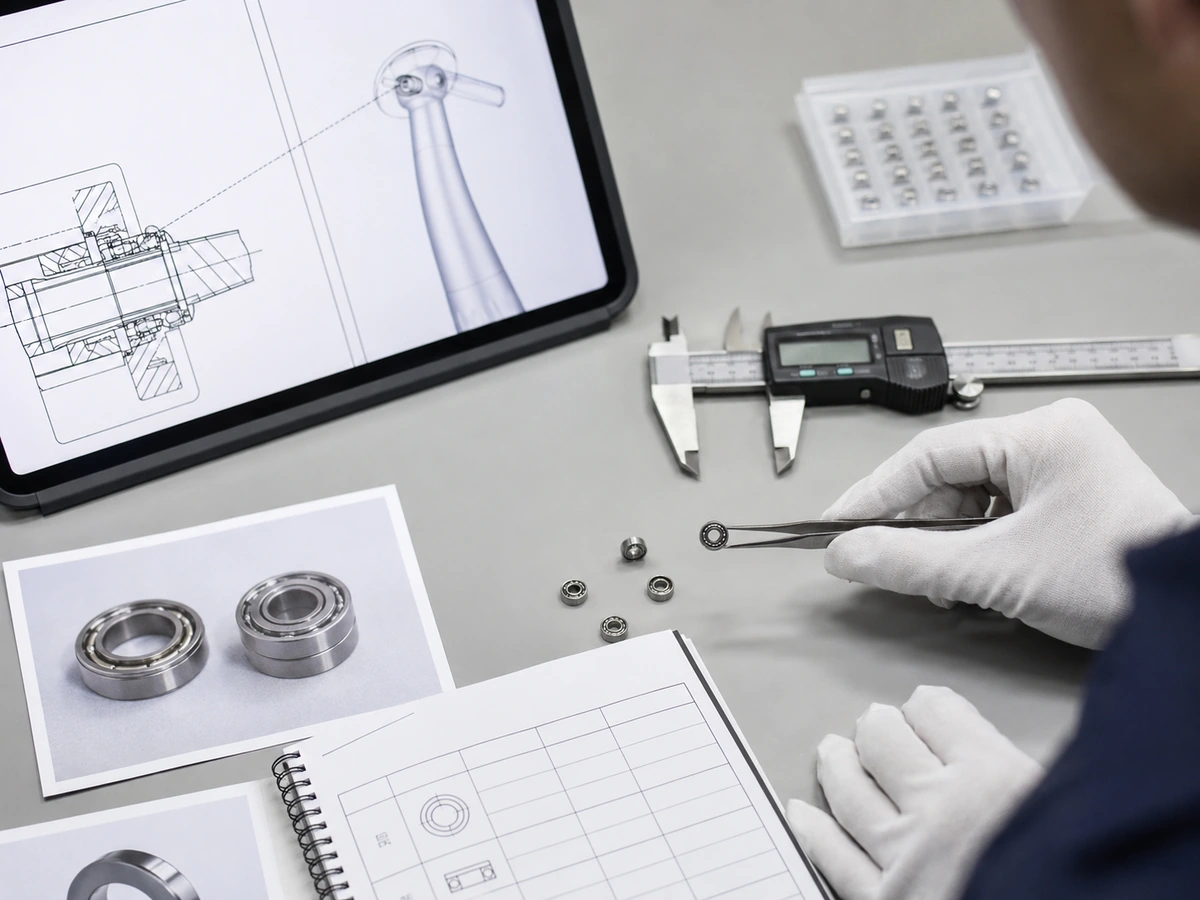
Engineering guides for dental bearing selection, dimensions, materials, handpiece applications, identification, handling, troubleshooting and technical evaluation. Use these resources to narrow possible bearing candidates before product or compatibility confirmation.
Technical Knowledge Map
Technical Center topics cover distinct selection, identification and comparison tasks. Use commercial category pages for product discovery and these guides for technical review.
Understand the variables that should be reviewed before choosing a dental bearing candidate.
Learn how ID, OD, width and special geometry are measured and compared.
Compare rolling elements, rings, cages, shields, contact design and related construction features.
Understand how application type, assembly and bearing position can affect selection.
Learn how bearing numbers, dimensions, alternative references and application evidence are compared.
Review general handling, cleanliness, load-path and installation considerations.
Review possible contributors to noise, vibration, heat, short service life and other symptoms.
Understand how dimensional data, surface condition, construction details and traceability information support a review.
Organize bearing numbers, measurements, application details and photographs before requesting review.
Selection Framework
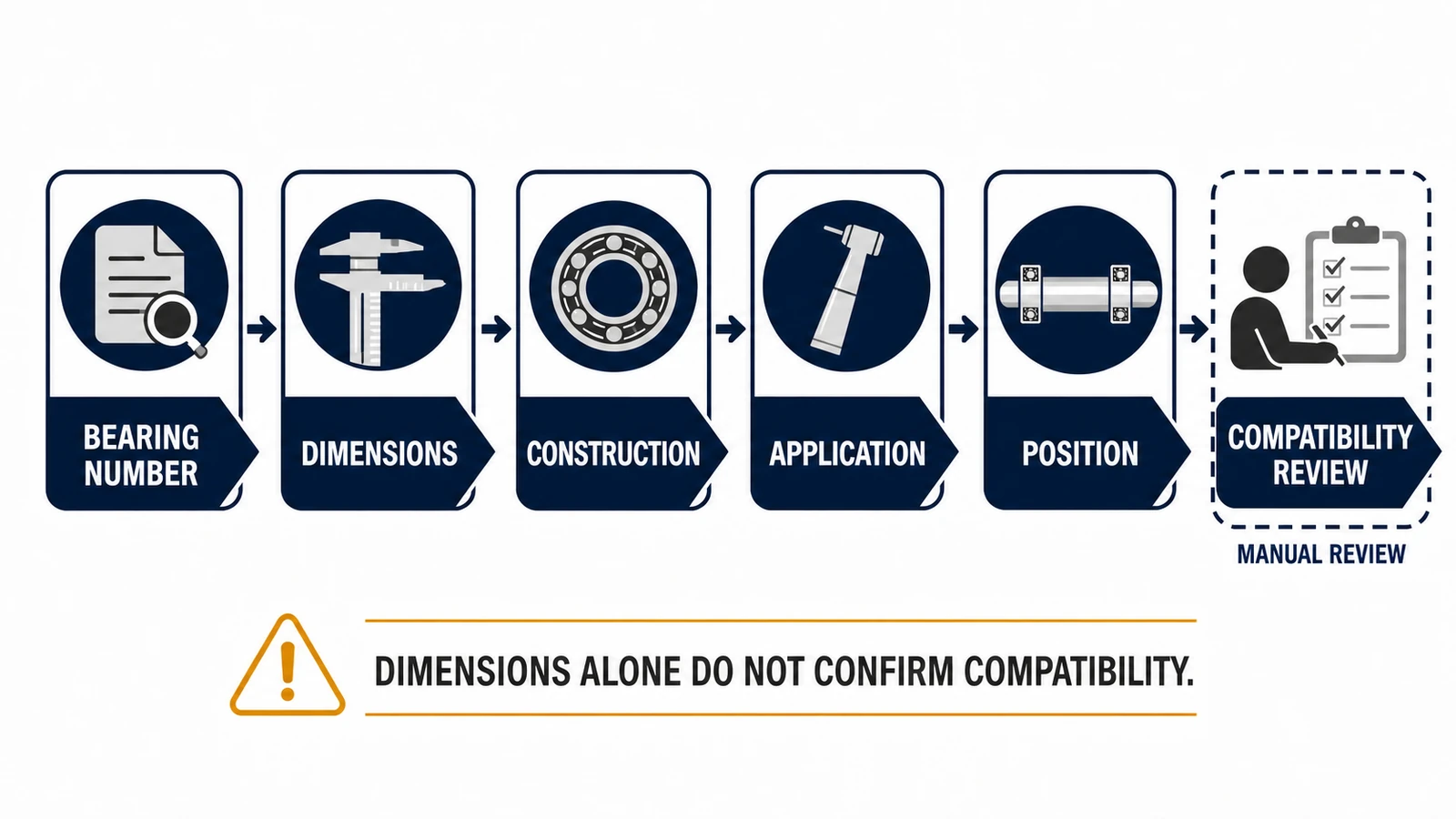
Reliable dental bearing selection usually requires more than one identifier. Review the available number, dimensions, construction, handpiece application, bearing position and compatibility evidence together.
Core Guide Paths
Choose the guide path that matches the current task: defining requirements, identifying a bearing or confirming an application.
Learn which specification fields should be reviewed before a product candidate is considered.
Use markings, dimensions and application context to narrow possible bearing records.
Confirm the handpiece, assembly, version, bearing position and product relationship before ordering.
Measurement & Identification
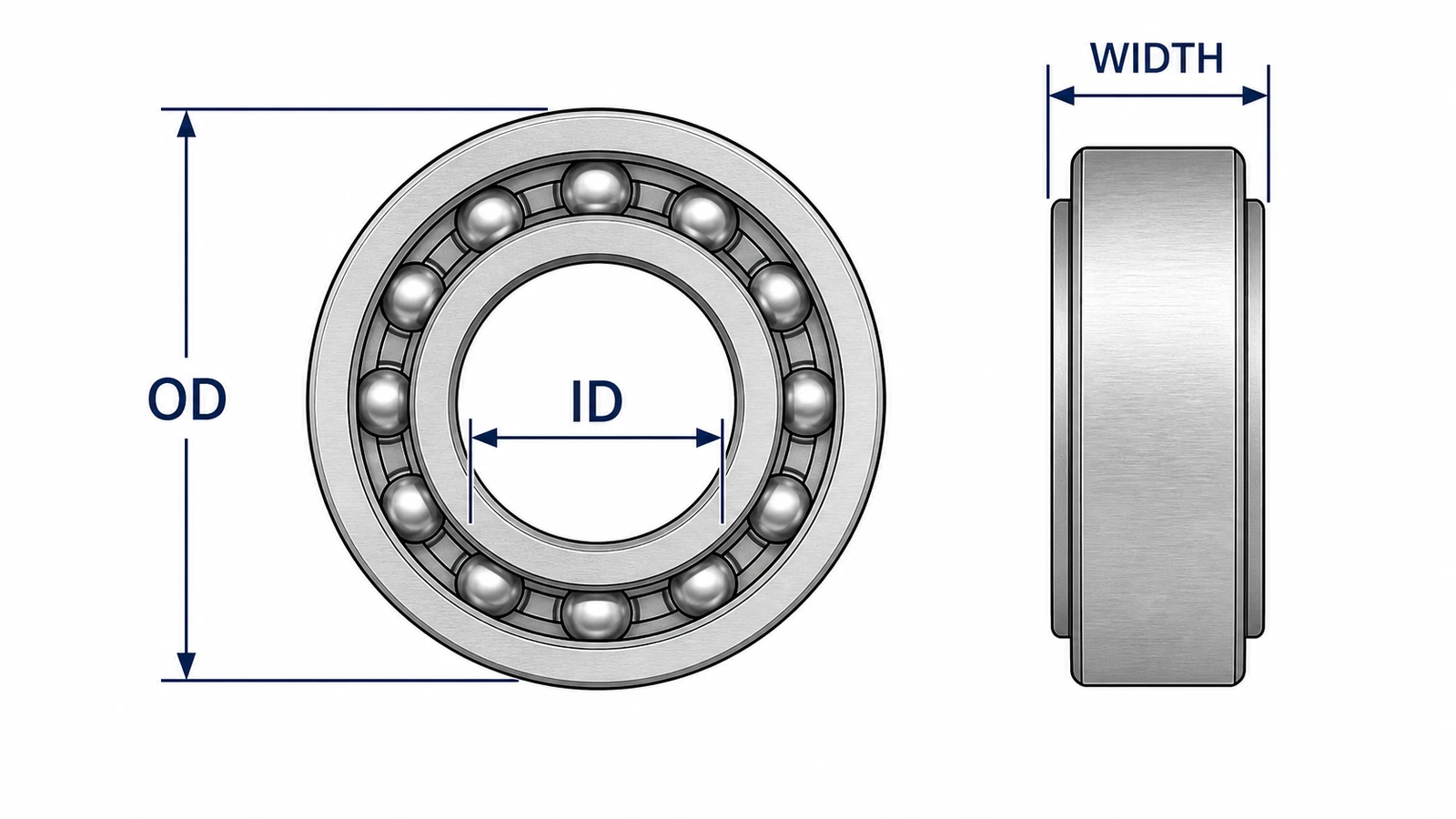
Bearing measurements can be extremely useful when markings are incomplete or unreadable. Record ID, OD and width carefully, then compare those values with construction and application data.
Application Engineering
This section provides engineering context for bearing selection and identification. General product discovery remains on the application category pages.
Review turbine, cartridge, front/rear position, construction and model/version variables.
Review head, gear, spindle, ratio, assembly and exact model variables.
Review motor, shaft, spindle, connection and model-specific application data.
Use exact assembly and application data where surgical or implantology configurations are involved.
Materials & Components
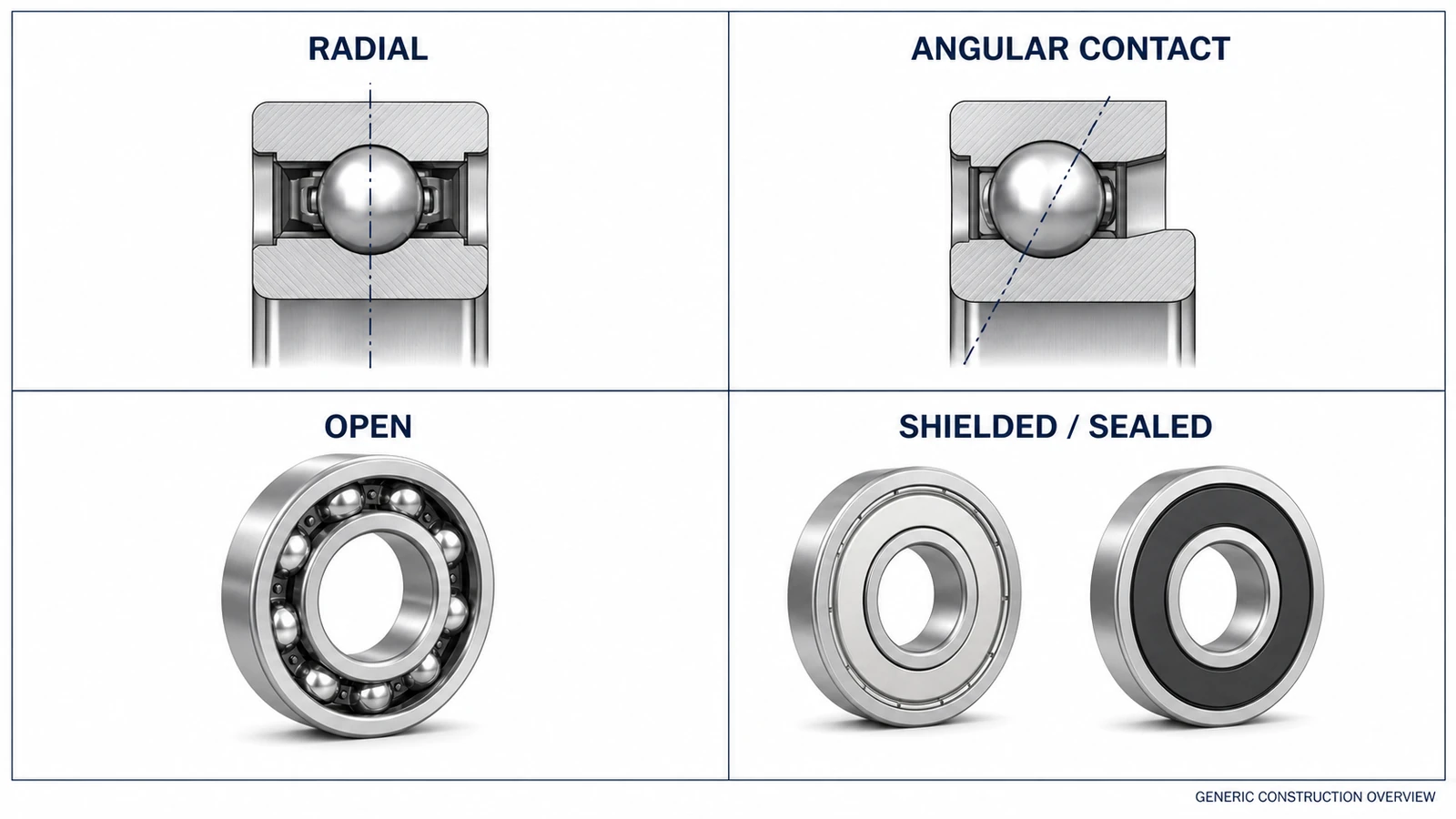
Material and component guides should explain technical differences. The commercial ceramic and steel pages should remain responsible for browsing products.
Compare ceramic and steel rolling elements, ring materials and the limits of material-only selection.
Review cage configuration, shield/seal choices and radial or angular-contact design in application context.
Troubleshooting Knowledge

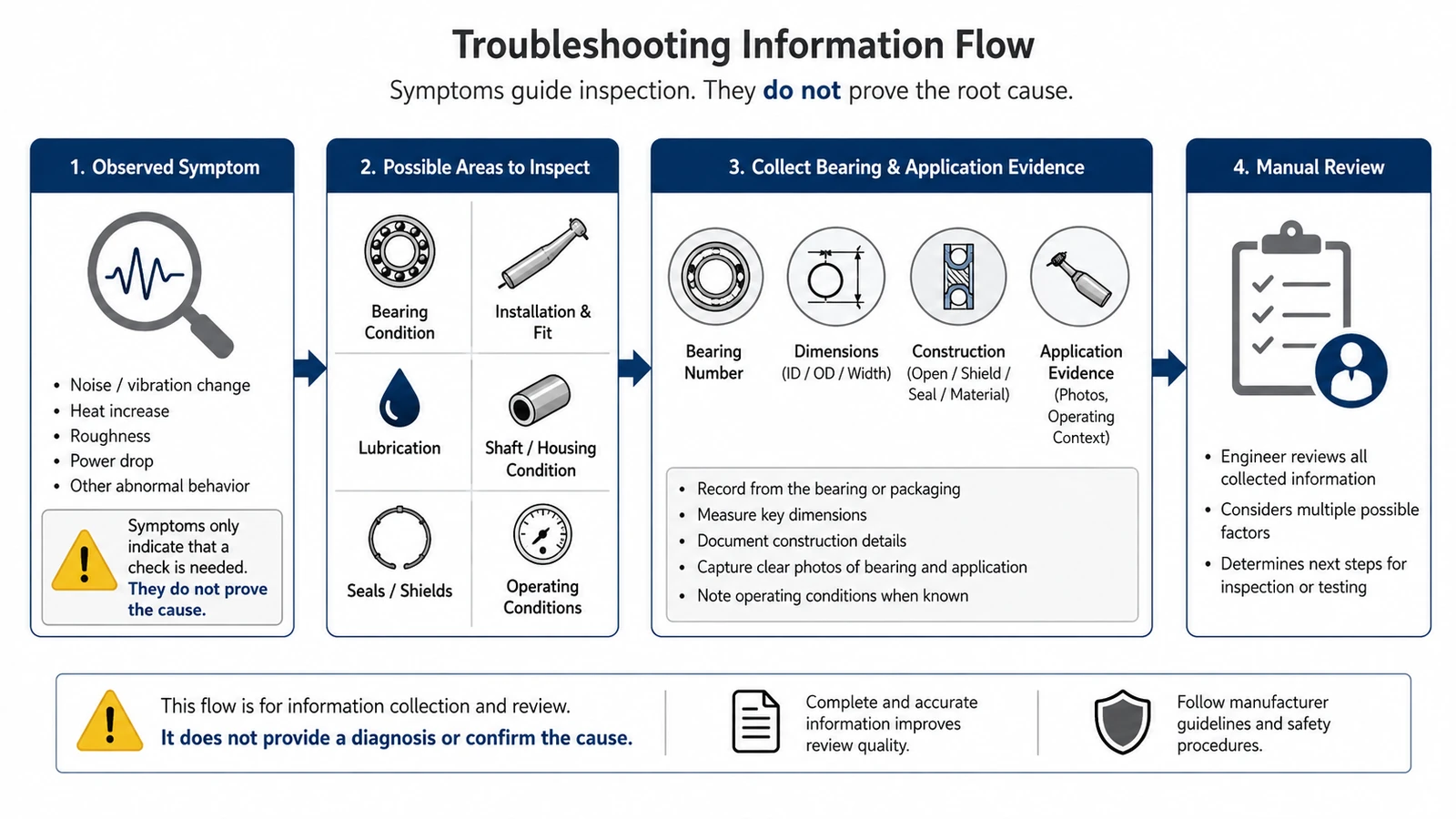
Symptoms such as noise, vibration, heat or short service life may have more than one possible contributor. Use troubleshooting content to narrow causes rather than making absolute diagnoses.
May be associated with bearing condition, contamination, installation, balance, assembly or other application variables.
May warrant review of the bearing, assembly, fit, contamination, handling and other mechanical conditions.
Can be influenced by application, installation, contamination, handling, lubrication, load and product specification.
Technical Tools
Use the dedicated paths below to submit identifiers, compare dimensions and organize supporting application information.
Search a complete bearing number, supplier SKU or alternative reference.
Submit the exact brand, model, version and supporting application details.
Use dimensions to narrow possible bearing candidates.
Combine markings, measurements, application data and photos.
Review alternative bearing, supplier and application references.
Technical Evidence
Distinguish documented source facts, measured values, application evidence and engineering interpretation before selecting a bearing.
Record where model, bearing, application or specification information came from.
Keep measured values, documented values and inferred relationships separate.
Preserve the exact model, assembly, position, version and compatibility context where relevant.
Check whether technical documents identify a current revision or issue date.
Technical Review Preparation
A structured information set helps repair shops and distributors reduce ambiguity during bearing identification and RFQ review.
Include only information that can be read, measured or supported by available documentation.
B2B Technical Support
Repair shops, distributors and technical buyers can submit structured model, bearing, dimension, supplier-reference and quantity data for technical and commercial review.
Quick Answers
Start with the complete bearing number where available, then record ID, OD and width, construction details, the exact handpiece or assembly, bearing position and any supporting compatibility evidence. No single field should automatically override conflicting application information.
Not automatically. Matching external dimensions can narrow possible products, but contact design, rolling-element material, cage, shield, geometry, internal specification, application and bearing position may still differ.
Record the inner diameter, outer diameter and width using suitable measurement equipment, and note any flange or special geometry. Measurement should be used together with bearing markings, construction and application data.
No. Rolling-element material is only one part of the complete specification. The exact model, application, bearing position, dimensions and construction should be reviewed before substitution.
Not necessarily. Different assemblies, versions, turbine or cartridge configurations, bearing positions or production variants may require separate confirmation.
A single handpiece or assembly can contain more than one bearing position. Front, rear, head, gear, motor or spindle positions may use different bearing records even within the same model.
Possible contributors can include application conditions, contamination, handling, installation, fit, load, balance, lubrication, assembly condition and bearing specification. A symptom should be reviewed in context rather than treated as a single-cause diagnosis.
Use the information you already have—bearing number, handpiece model, dimensions or application details—to choose the correct identification path before product confirmation.