ID
Inner Diameter
The bore or internal diameter of the bearing. Record the value from a suitable measurement or trusted technical source.

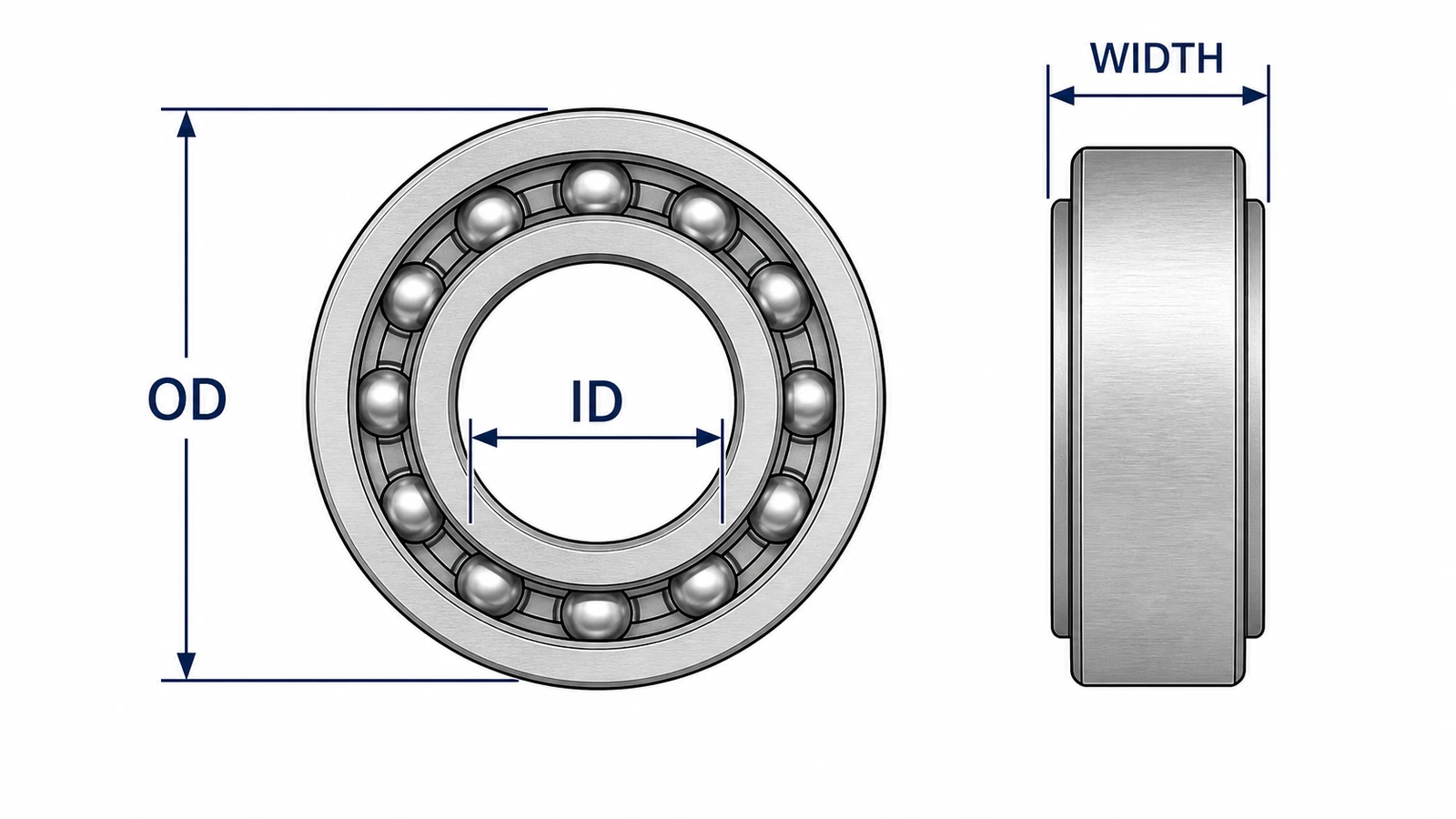
Dimensional Identification Guide
Use inner diameter, outer diameter and width to document a dental bearing for review. Compare the measured dimensions with bearing construction and application data before confirming a replacement.
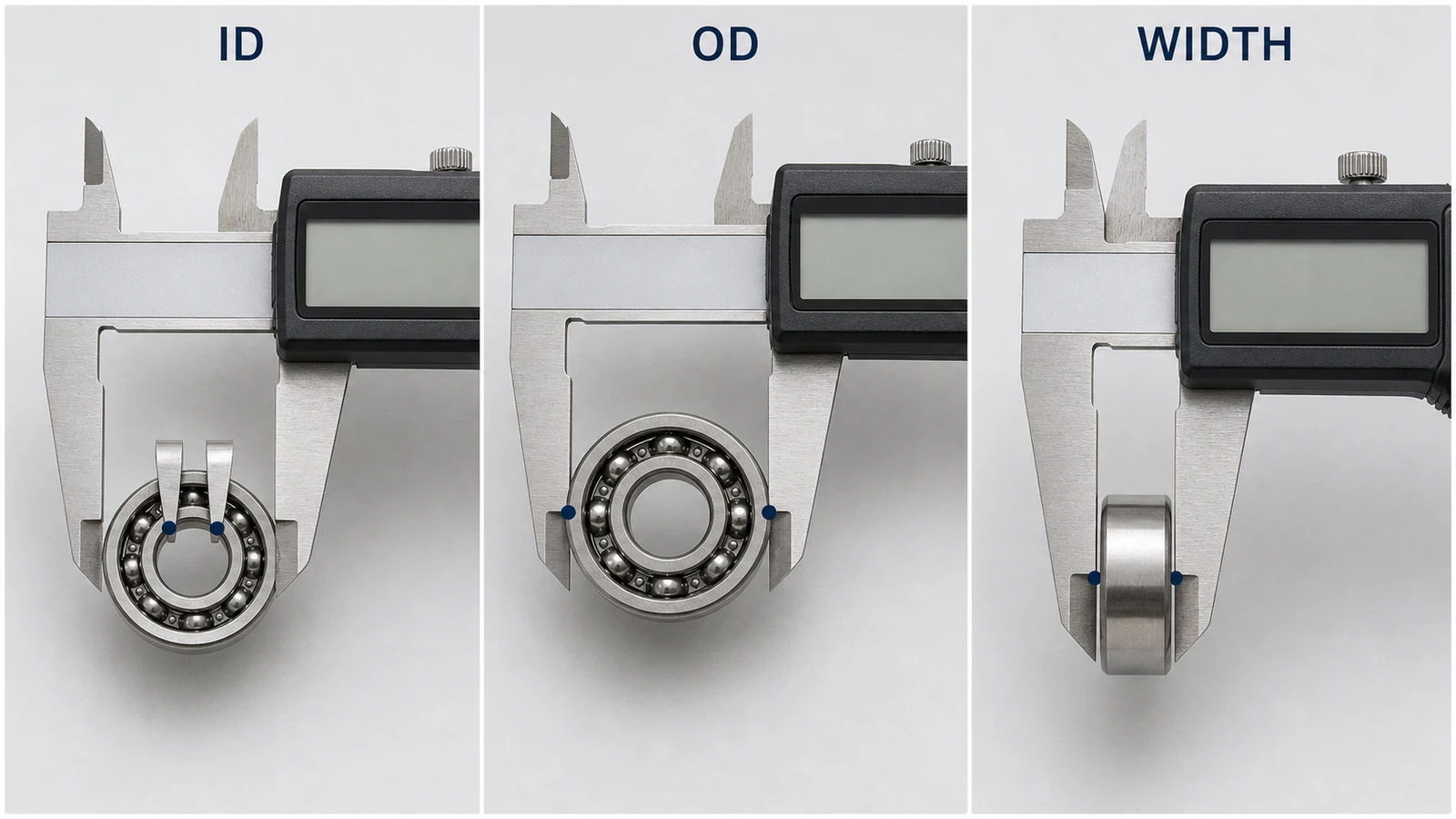
Provide the bearing number, dimensions, handpiece brand and exact model, assembly information, clear photos and required quantity when available.
Dimension Basics
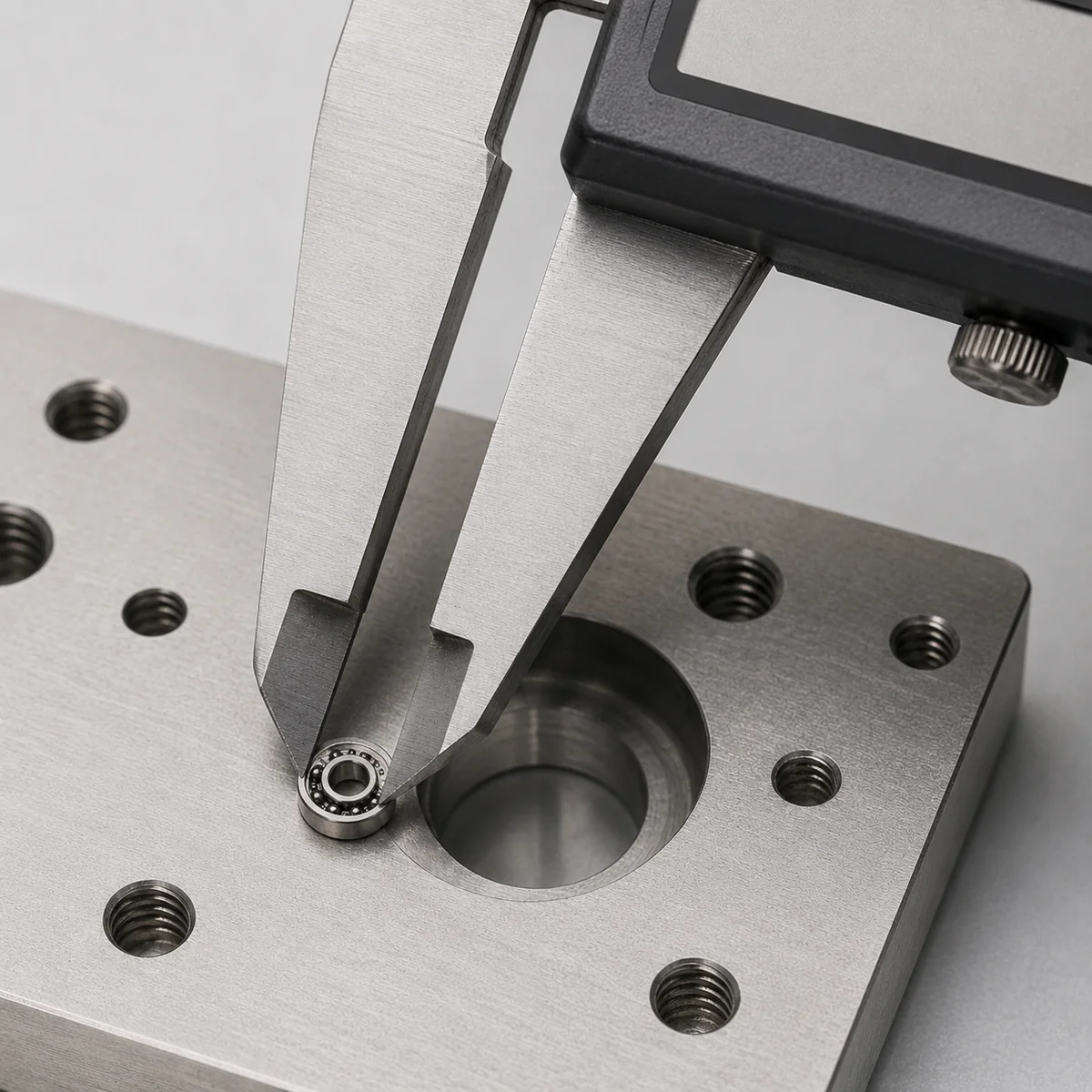
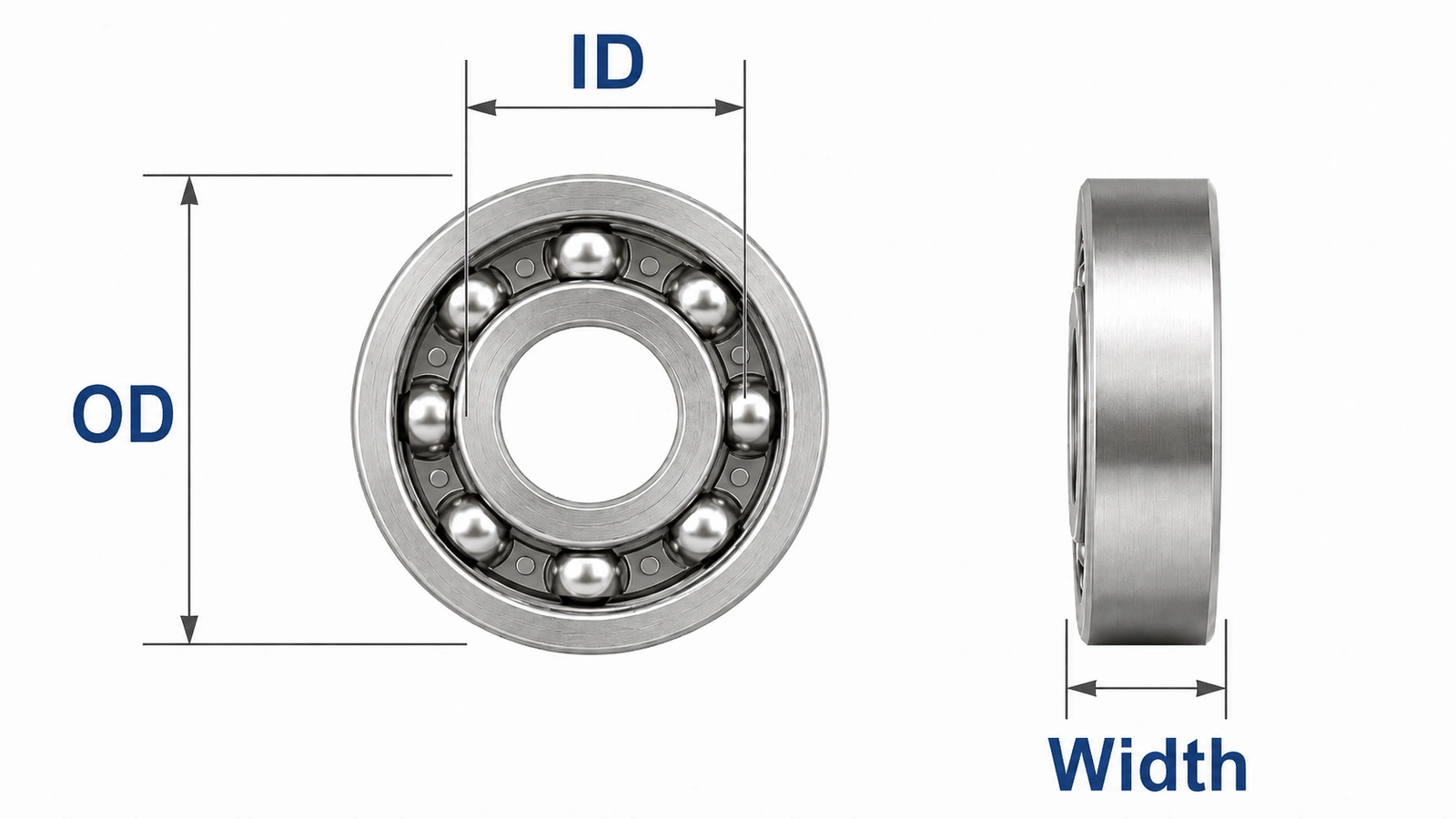
These three basic dimensions are the starting point for dimensional identification. Special bearing geometries may require additional measurements such as flange diameter or flange width.
The bore or internal diameter of the bearing. Record the value from a suitable measurement or trusted technical source.
The outside diameter of the bearing. Use the same unit and measurement convention as the other dimension fields.
The overall bearing width. Flanges or other special geometry may require additional dimensions beyond this basic value.
Match Status
ID, OD and width match the reviewed dimension record. This does not automatically confirm the handpiece application.
A reviewed record is close to the measured values but requires additional dimensional and application review.
A separate reviewed application record confirms a product relationship to the specified handpiece, assembly or bearing position.
The dimensions are useful, but more handpiece, assembly or bearing-position information is still required.
Available dimensional and application information is not sufficient for a reliable product relationship.
Available reviewed records do not provide an exact dimensional match. Recheck the measurement or use the identification workflow.
B2B Comparison
When multiple bearings share the same or similar dimensions, compare the complete specification before moving to application confirmation.
GEO / Technical Answer
Not automatically. Matching ID, OD and width can narrow possible candidates, but rolling-element material, cage, shield, contact design, geometry, internal specification, application and bearing position may still differ.
Data Review
Dimensional records and compatibility records should remain separate. A dimension record identifies a candidate size; a reviewed application record establishes the relationship to a particular handpiece, assembly or bearing position.
Record whether a dimension came from a trusted specification, drawing, physical measurement or another reviewed source.
Store dimensions in one canonical unit and calculate alternate display units consistently.
Keep exact model, assembly, bearing position and compatibility status separate from dimensional matching.
Continue Identification
Dimensions are one part of bearing identification. If you know a number, model or application, use that information to improve identification confidence.
Search the complete bearing number, supplier SKU or alternate reference.
Search reviewed brand and model records, then confirm version and position.
Combine markings, dimensions, model, position and photos when possible.
Review supplier and alternative bearing references in the dedicated cross-reference tool.
B2B Dimension Review
Repair shops, distributors and technical buyers can submit structured dimension lists together with bearing numbers, handpiece models, current supplier references and quantities for review.
Common Questions
The three basic dimensions are inner diameter (ID), outer diameter (OD) and width. Special designs may also require additional measurements such as flange diameter, flange width or other geometry.
Dimensions can narrow the candidates, but they may not uniquely identify the complete bearing specification or confirm a handpiece application. Review construction, application, position and compatibility evidence as well.
Not automatically. Equal ID, OD and width do not prove that material, cage, shield, contact design, geometry, internal specification or application are the same.
Use the unit available from your measurement or source reference. Values can be converted consistently during technical review, while the original measured or documented value should be preserved.
Recheck the measurement method, review any flange or special geometry, broaden the comparison only when appropriate, or submit the bearing and handpiece information through the identification workflow.
No. Rolling-element material is only one part of the full specification. Application, bearing position, construction and compatibility still need review.
Use the handpiece model lookup after narrowing the dimension candidates. Exact model, version, assembly and bearing position information can help distinguish candidates that share similar dimensions.
Start with ID, OD and width, compare the complete bearing construction, then use model, bearing-number or identification data to confirm the correct replacement path.