Exact Bearing Number
Provide the complete identifier exactly as it is marked or documented.

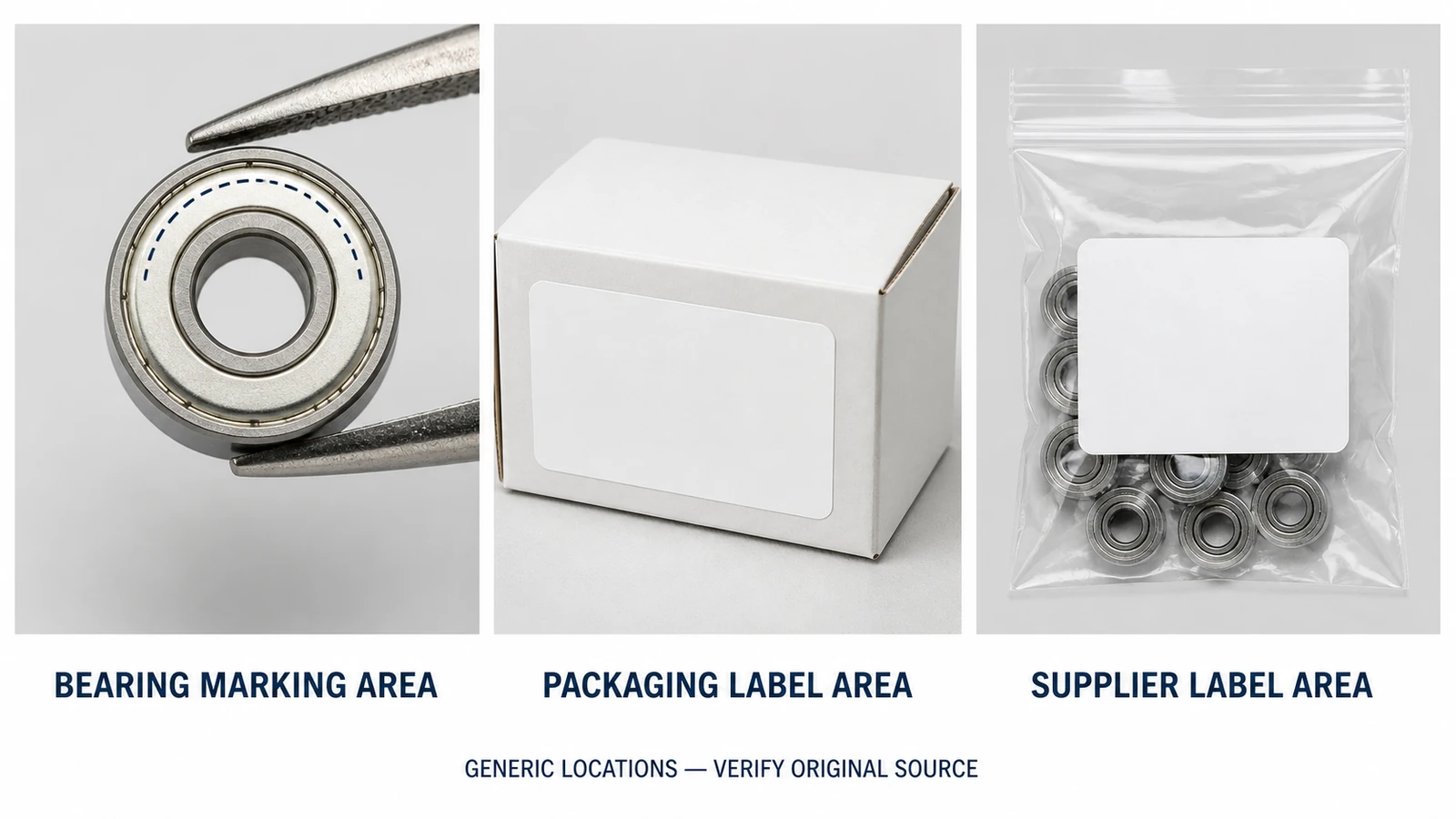
Exact Identifier Review
Provide the complete dental bearing number for identification and application review. Keep suffixes and designation characters whenever possible because they may distinguish different variants.
Bearing Number Identification
Send the number exactly as marked on the bearing, packaging, drawing or trusted reference. Include the handpiece model, bearing position, dimensions and photos when available.
Identification Paths
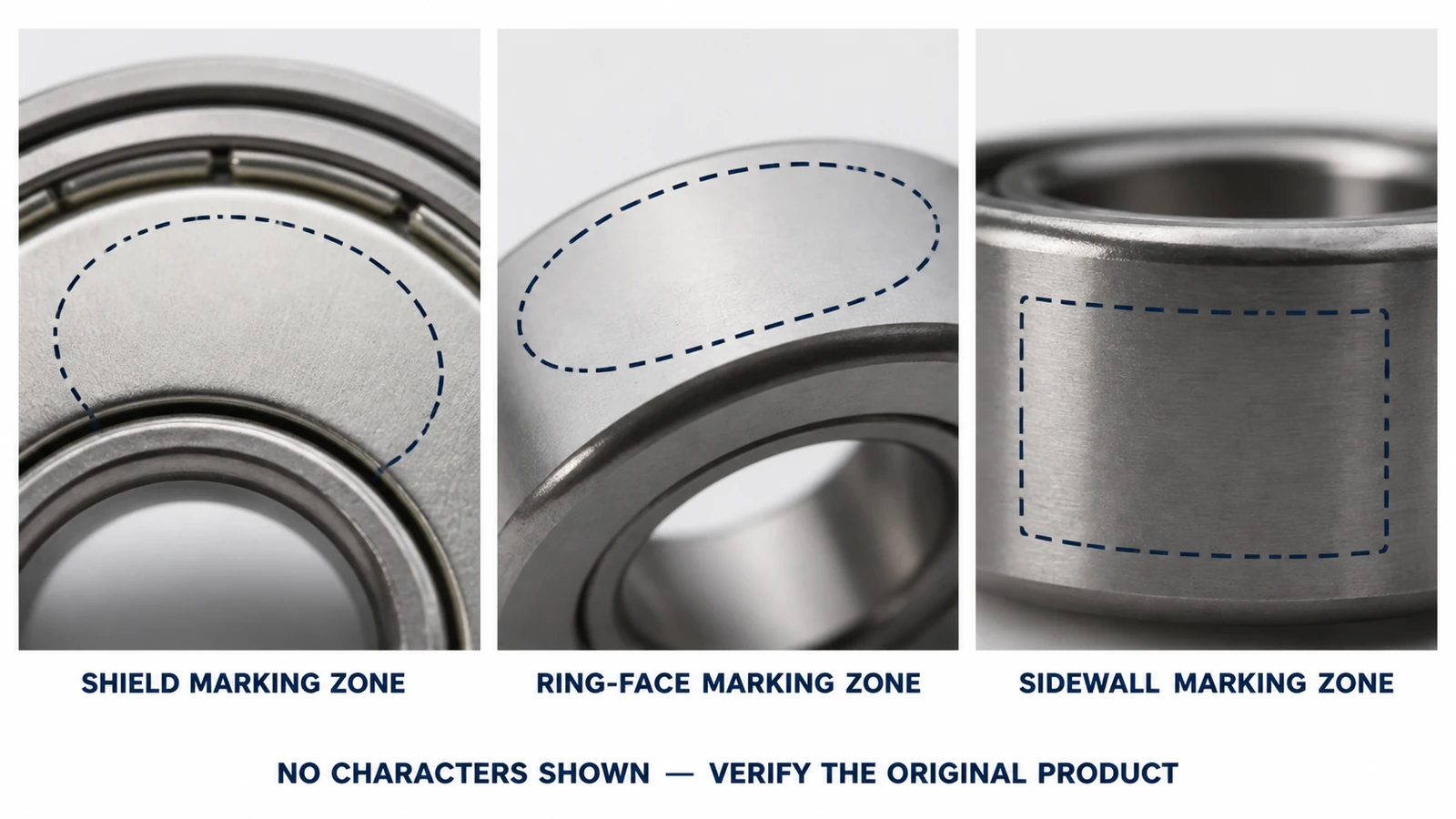
A complete bearing number, product SKU, alternative reference, dimensions and handpiece model provide different kinds of evidence. Choose the path that matches the information available.
Provide the complete identifier exactly as it is marked or documented.
Identify it as a product or supplier reference so it is not confused with the technical bearing number.
Keep all letters, numbers and suffixes even when spacing, case or punctuation differs.
Use the cross-reference path to review a relationship between different identifiers.
Use ID, OD and width when the bearing number is unavailable or unreadable.
Use the handpiece model or submit markings, dimensions and photos for identification.
Critical Data Rule
Recognizes the same identifier when only harmless formatting differs, such as letter case, spacing or accepted punctuation.
Purpose: identify the same bearing number consistently.
Connects two different identifiers only when supporting documentation establishes the relationship.
Purpose: check one reference against another.
Match Status
A review may identify an exact number, a harmless formatting variation, a bearing family or a possible cross-reference. Compatibility with a specific handpiece still requires separate confirmation.
Complete Identifier
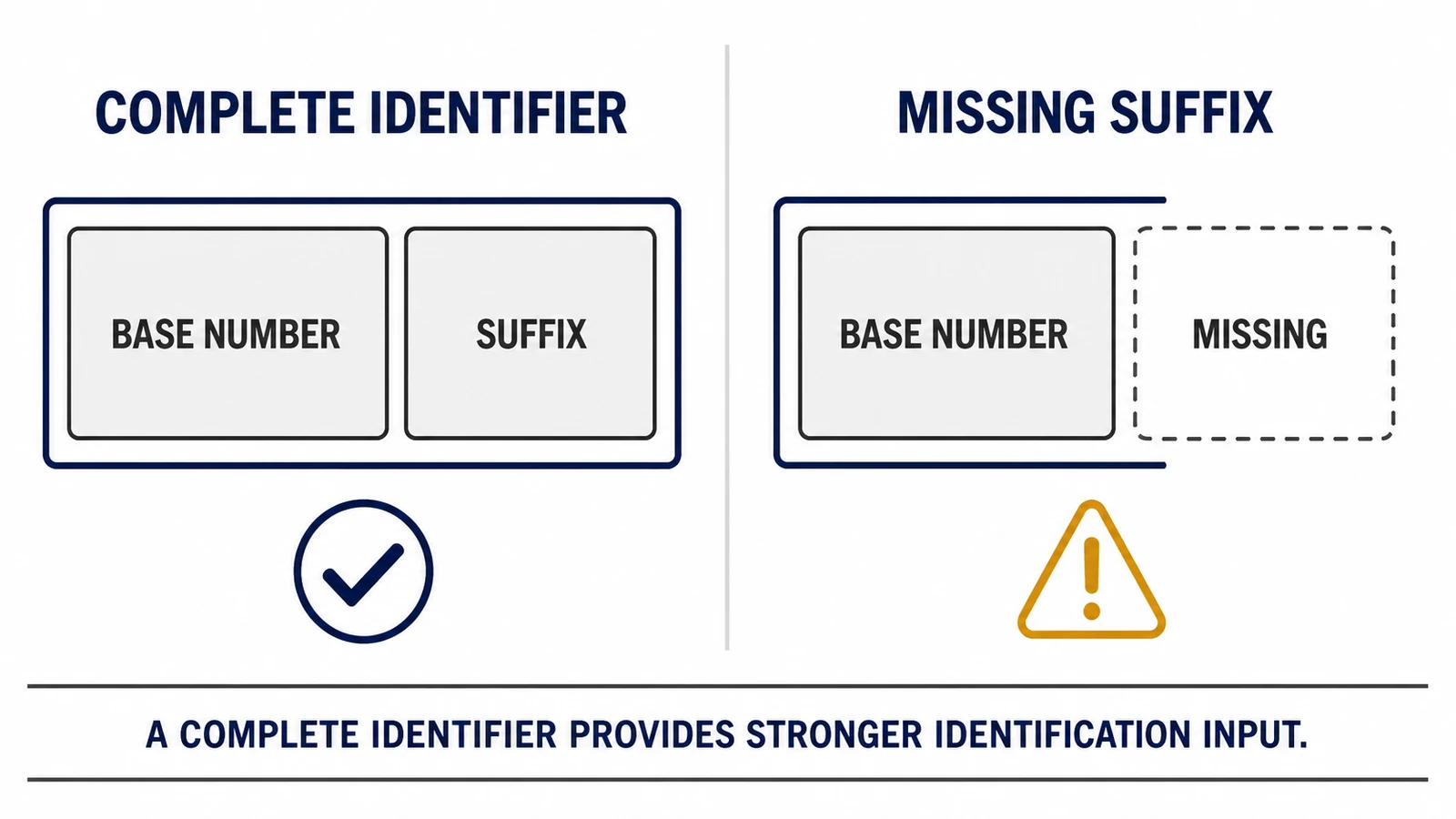
A base number may identify a bearing family, while suffixes or additional designation characters may distinguish variants or construction information. Enter the complete number whenever it is available.
Preserve the complete documented or marked identifier for the highest-confidence number lookup.
A base number may cover more than one suffix or variant, so the complete designation may still be required.
Add dimensions, handpiece model, bearing position or photos through the identification workflow.
No Exact Match?
If the number does not identify an exact bearing, use the strongest remaining information: an alternative reference, dimensions, handpiece model or clear photos.
Use supplier, historical or alternative-number mapping rather than treating it as an exact primary number.
Use ID, OD and width to narrow dimensional candidates.
Use the exact brand, model and assembly version, then confirm the bearing position.
Combine partial markings, dimensions, application details and photos.
Related Product Type
If the identified bearing is part of a model-specific kit, confirm the complete kit SKU, included components and handpiece application before ordering.
Compare the complete bearing number and available specifications before submitting an enquiry.
Check the kit SKU, component list and exact handpiece or assembly application.
Application Review
Keep the original identifier, harmless formatting variations, bearing specifications and handpiece application evidence separate so a number match is not mistaken for confirmed compatibility.
Retain the source number exactly as marked or documented.
Case, spacing and accepted punctuation are considered without removing meaningful suffixes.
Check available dimensions, materials, contact design, cage, shield and geometry as separate product information.
The exact handpiece, assembly, bearing position and compatibility status require separate confirmation.
Bulk B2B Review
Repair shops, distributors and technical buyers can prepare a structured list of bearing numbers, supplier references, dimensions, known handpiece models and required quantities for review.
B2B Number Matching
Provide bearing numbers, supplier SKUs, known handpiece models, dimension data and quantities for structured technical and commercial review.
Quick Answers
Submit the complete bearing number exactly as it appears on the bearing, packaging, drawing or trusted reference. Keep suffixes where possible and include the handpiece application, dimensions or photos when available.
No. An exact number can identify a bearing record, but the intended handpiece, assembly, bearing position and application evidence should still be confirmed separately.
A base number may identify a bearing family, while suffixes or additional designation characters may distinguish variants or construction information. The complete identifier reduces ambiguity.
A partial number may identify a family or candidate set, but it should not be treated as an exact-number match. Add dimensions, handpiece model, bearing position or clear photos where possible.
Provide the number as documented when possible. Harmless formatting differences can be compared, but meaningful suffixes or designation characters should not be discarded.
Not necessarily. A primary bearing number identifies a bearing record, while a cross-reference requires supporting documentation that connects different references.
Use the cross-reference tool for alternative references, the size chart if dimensions are known, the model lookup if the handpiece is known, or bearing identification when the available number is incomplete or unclear.
Yes. Prepare a structured list with each bearing number, supplier reference, dimensions, known application and required quantity, then submit it with the RFQ details.
Preserve the complete identifier, review the number-match status, compare the bearing specification and confirm the handpiece application before ordering.