FAQ
It is recommended that you read the following maintenance tips:
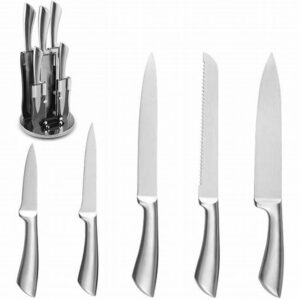
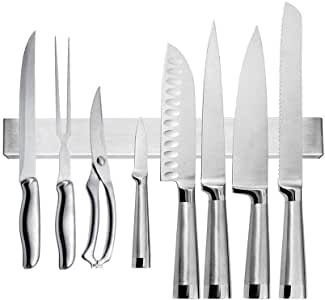
After use, please use running water to rinse table knives and kitchen knives! If the tool is not clean, there are long-term salt or acid residues, which may cause rust.
All household kitchen knives with plastic handles can be cleaned in the dishwasher. At the same time, it is recommended to use the flushing method. In addition, please make sure to turn on the dishwasher immediately after cleaning. Hot water vapor and water condensation can also cause corrosion (crevice corrosion) on the blade.
If the cleaning agent used is too aggressive or too large, it may also cause rust.
Valuable knowledge about stainless steel table knives and kitchen stainless steel appliances
Spoons, forks and metal utensils such as pots, sinks and covers are made of non-magnetic 18/8 and 18/10 high-alloy chromium-nickel steel. In addition to 18% chromium, this material also contains 8-10% nickel. This kind of steel has a high degree of rust resistance, especially to prevent the rust caused by the salt in the leftovers and the regenerated salt. Although the blade of chromium-nickel steel is very resistant to rust and acid, it is prone to curling and will quickly become dull.
“No rust”, “not embroidered”, “non-oxidizing” or “non-oxidizing” and other good names are actually conditional. Incorrect cleaning methods can damage the blade and cause it to rust. Long-term humidity, high salt content in the air or water, and acid in food may all be the cause of rust.
If the steel contains more carbon (0.3%-1.0%), the more it can be solidified, the better the cutting performance of the cutting edge, but at the same time, the worse its rust resistance. Conversely, the lower the carbon content, the better the rust resistance of the steel, but the worse the machinability. Therefore, when the tool steel has a high carbon content, molybdenum can be added to improve its poor rust resistance.
We only use first-class steel that can meet high-quality requirements in our production. For different steels, it means to use special alloys that meet the specified characteristics and are of great significance to the relevant application field. Before the raw material is put into use or allowed to be used in processing, it must pass various tests and inspections.
Stainless Steel Cookware Health Risks
Metals in cookware can pose a health concern. In some cases, these metals can be absorbed by the healthy foods you’re cooking. What you thought was a healthy, nutritious meal can actually carry bits of metals you’d rather not eat. Someone take a look at each metal and its pros and cons to see how it can impact overall health.

What are the materials of the pots and pans?
Non-stick Pan: Non-stick Pan
Teflon coated non-stick pan: Teflon non-stick
Ceramic coating: Ceramic
Hard anodized non-stick pan: Hard anodized non-stick
Stainless steel: Stainless steel
Cast iron: Cast iron
Enamel, enamel: Enamel
How long can the tableware last?
The service life of plastic tableware is very short. You have to replace it in one or two months. If the surface of your plastic tableware becomes rough and smells plastic, then throw it away immediately. it’s the best.
◆ When must it be thrown away?
①The surface becomes rough
Iron and aluminum tableware should not be used together.
Although iron tableware is safer, the combination of iron and aluminum tableware will cause greater harm to the human body.
Since iron and aluminum are two metals with different chemical reactivity,
When water is present, aluminum and iron can produce a chemical reaction, and finally aluminum ions enter the food.
The advantages and disadvantages of several kinds of materials
1. Stainless steel kitchenware: Stainless steel kitchenware is highly respected by modern people, and it is more and more widely used in the catering industry. Not only is it not easy to rust, but also has many other advantages, such as fast heat conduction and high cooking efficiency; It is not easy to wear; the shapes and functions are diverse, which are suitable for the development needs of the modern catering industry; in addition, from the health point of view, stainless steel kitchenware is more stable than aluminum kitchenware, which is more conducive to human health.
2. Wooden kitchenware: The advantage of wooden kitchenware is that it has good heat insulation, is not easy to hurt hands, and the material is relatively soft, and does not damage the pot surface, etc.; but wooden kitchenware also has its inevitable shortcomings, such as long-term use, easy to be stained with bacteria. Moreover, poor quality wooden kitchen utensils are easily damaged; in time, after a slight damage, the surface is not smooth enough, so it is also difficult to clean.
3. Aluminum kitchenware: Before the promotion and use of stainless steel kitchenware, aluminum kitchenware used to be the mainstream kitchenware in the market. Most of its advantages are similar to stainless steel kitchenware, but recent scientific research has found that aluminum ions in aluminum kitchenware cannot contain strong acid or alkaline foods, and will not dissolve out during normal cooking, boiling water, or boiling soup. Less aluminum ion. The aluminum ion will accelerate the aging of the human body and even cause Alzheimer’s disease. Therefore, it is self-evident that the long-term use of aluminum kitchen utensils is harmful to the human body.